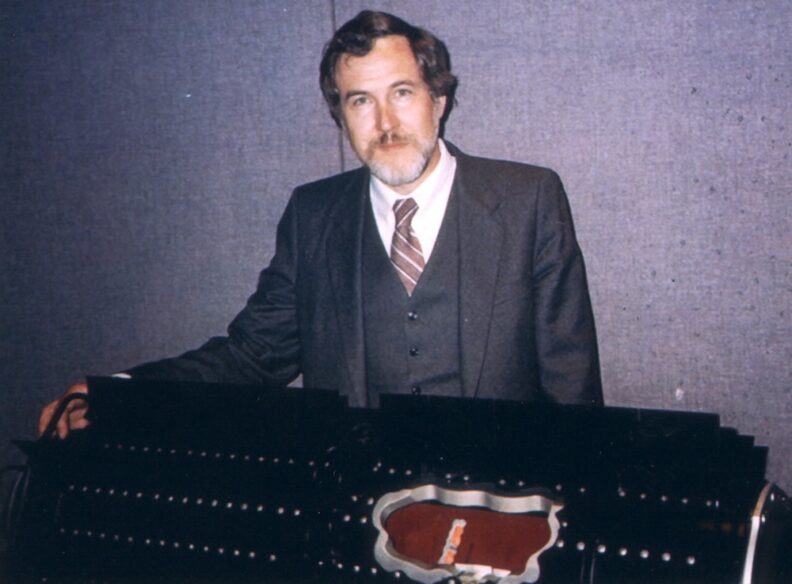
Our Crimson 50 series honors Cougs who have been making gifts to Washington State University for 50 years. Their enduring generosity has created lasting opportunities for students, faculty, and communities across Washington and beyond. Each Crimson 50 profile shares their journey—from first gift to most recent—and their reflections on philanthropy, WSU, and the indomitable Cougar spirit.
Their Story
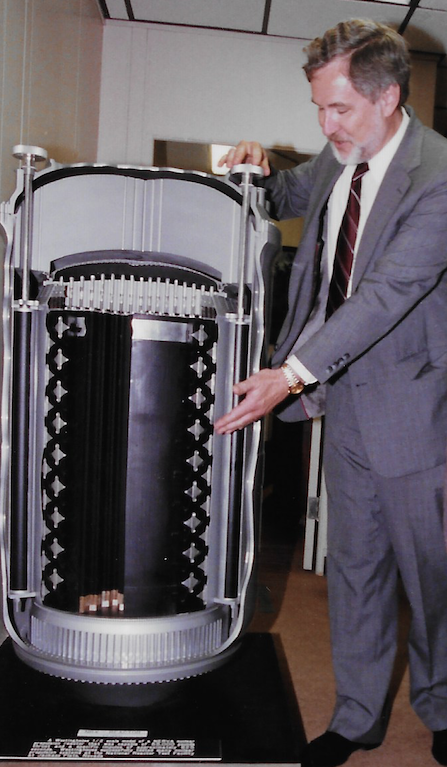
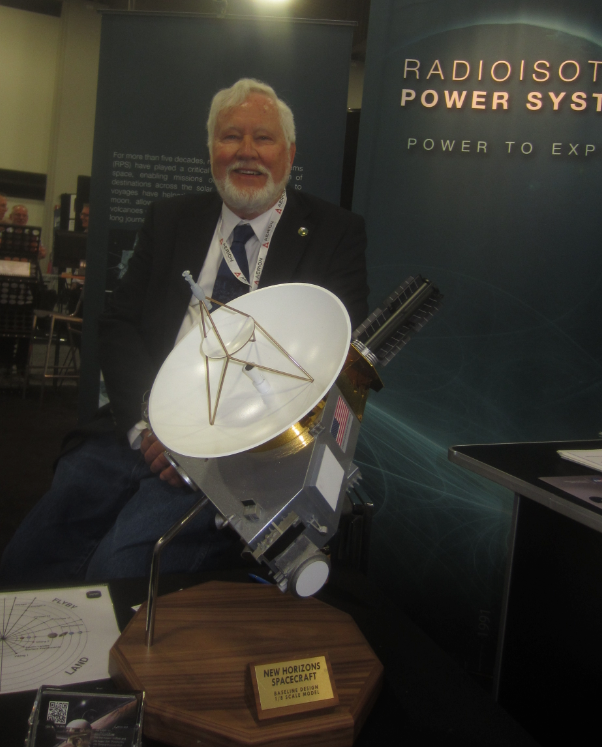
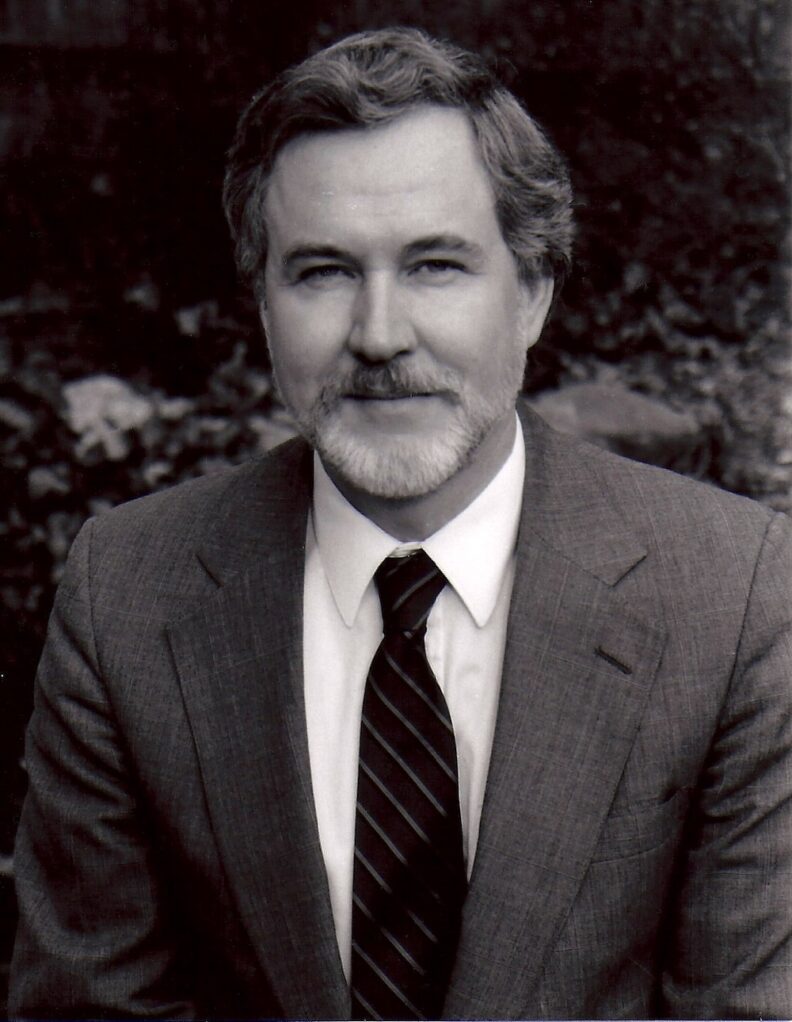
When Apollo 11 landed on the moon in July 1969, Gary L. Bennett (’70) was finishing his physics doctorate at Washington State University, eager to join the adventure. He would spend the next three and a half decades helping America explore the stars.
Gary’s path to a career with the Department of Energy and NASA began at the daily newspaper in his hometown of Boise, Idaho. As a teenager, he stuffed comics into weekend editions of the Idaho Statesman—all while serving in the Idaho Air National Guard—and saved enough to earn bachelor’s and master’s degrees at (what was then) Boise Junior College and the University of Idaho, then a PhD just across the state line at WSU. The career that followed spanned some 35 years at the nexus of physics, nuclear energy, and space exploration. On that last subject, Gary wrote the book. Literally.
The Star Sailors, his science-fiction novel first published in 1980 and republished in 2005 and 2009, centers on exploration and advanced propulsion—the same territory Gary covered in real life as a scientist on nuclear and space programs.
Along the way, Gary received financial assistance in the form of research assistantships and teaching assistantships that he’s been keen on paying forward through routine dues to the WSU Alumni Association and gifts for science-related scholarships, lectureships, excellence funds, and facilities.
“WSU took very good care of me economically,” said Gary, who returned with his spouse, Cleo Sue (“Susan”), to Boise for retirement after a career that took them to Ohio, Maryland, and Washington, D.C. “I’m very sensitive to making sure our students get the resources and support they need, because I certainly did.
“It’s the classic tale about helping those coming behind you. Getting a PhD from WSU really helped my career. The world that I worked in—nuclear and space—if you had an advanced degree, you were looked upon as ‘one of the drivers.’ My career just took off after that.”
Gary is quick to credit both Susan specifically and public higher education in general.
“None of what I did would have been possible without the support of my wife, who kept the home fires burning and worked various jobs that helped keep our finances in positive territory,” said Gary, who then shared some advice for aspiring scientists.
“Start early,” Gary advised. “When I graduated from Boise High School in 1958, a number of classmates wondered, ‘What do I do with my life?’ I had started early, which is more critical today with the ever-rising cost of college.”
Five Questions
Washington State University has been key to my career. Thanks to WSU, I had an exciting career in the space program. The connection through the decades is my belief that one should give back for what one has gained in knowledge and experience. In my case, that was the WSU Physics Department—now the Department of Physics & Astronomy.
Finishing my doctoral thesis and successfully defending it.
In terms of the values that guide my giving to WSU, I am particularly focused on physics. WSU had a strong physics program in the 1960s when I was a graduate student, and I want to see that strength continued. With breakthroughs in physics seeming to occur almost monthly, the nation needs physicists.
That WSU will continue to provide the knowledge, skills, and values that have made WSU the great school that it is.
Given the need for educated citizens as we enter the era of AI and strong competitors in other countries, it would seem that support should be there for both a technical and a liberal arts education. Having a College of Arts and Sciences gives WSU a chance to provide students with a broad-based education.
My focus is obviously on physics. It should be noted that physics—like the other sciences—is in the College of Arts and Sciences and therefore can provide students with access to a broader education, which is important in a multicultural world.