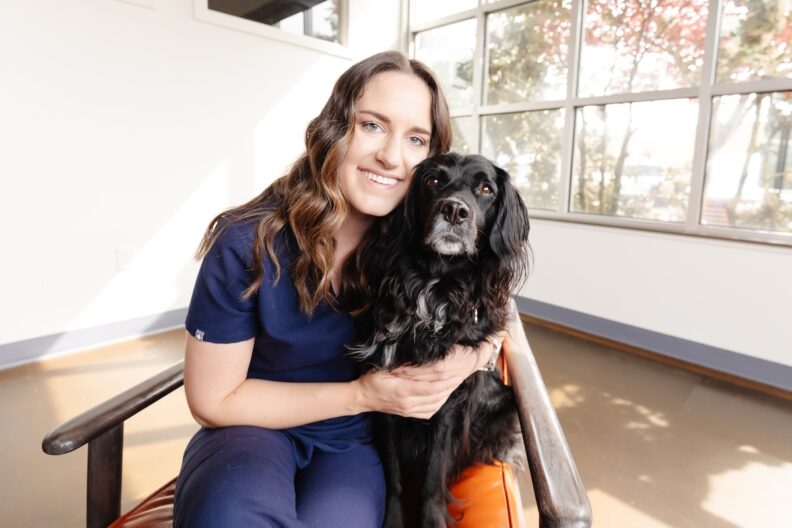
Life as a veterinary student at Washington State University’s College of Veterinary Medicine is equal parts high-wire act and juggling act. Coursework, labs, exams, tuition, housing—just to name a few—require constant attention and balance. And for those advanced students working in WSU’s 24/7 Veterinary Teaching Hospital in Pullman, the additional responsibilities of urgent care and emergency treatment for animals both small and large often leave little time to eat, especially during the frenetic and overnight shifts when options beyond the vending machine range between thin and nonexistent.
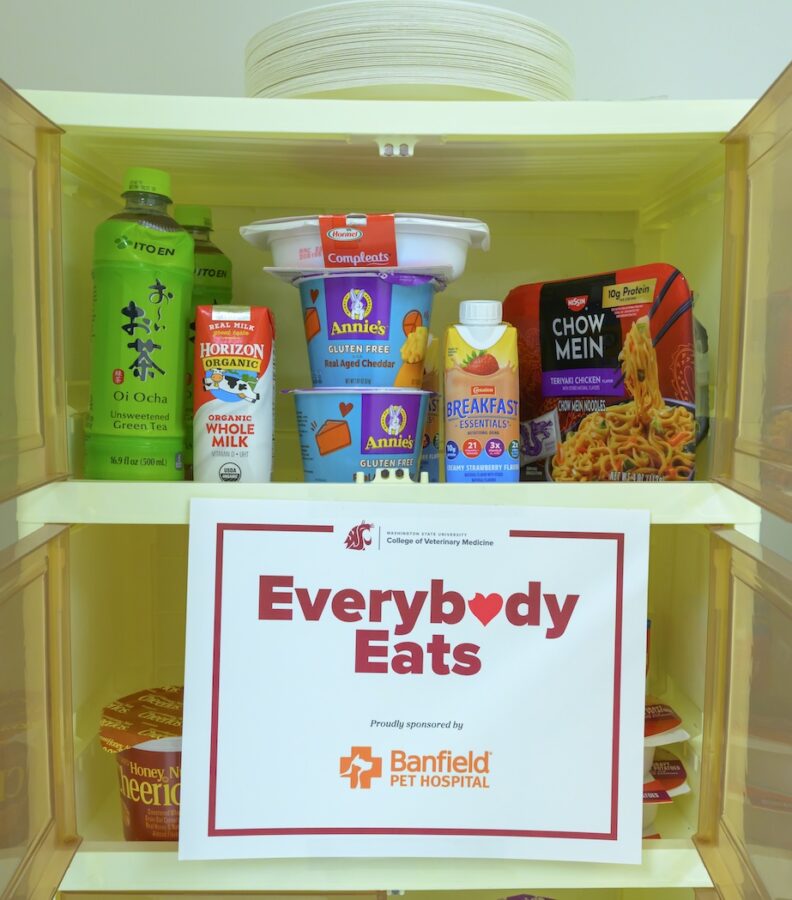
”There are only so many candy bars and potato chips that a student worker can stomach,” said WSU College of Veterinary Medicine Director of Community & Access Maurice Cottman, who helped launch a grab-and-go, healthier-snacks program at the Veterinary Teaching Hospital. Known affectionately as Everybody Eats, the initiative is a student-centered, food-access service designed for vet students working long, demanding shifts.
”Student workers are encouraged to pop into a break room or high-volume student area to choose from a variety of free, healthy options, including protein and snack bars, sugar-free caffeinated drinks, flavored noodles, and shelf-stable microwavable meals,” said Cottman, who noted that the state of Washington often ranks in the top 10 in the U.S. for grocery prices. “We know how to train the professional veterinarians of tomorrow to assess and improve the well-being of animals. We also know this: None of that is possible when students go hungry.”
The sponsor behind Everybody Eats is Banfield Pet Hospital, which is based in Vancouver, Washington, and operates veterinary clinics. Part of the Mars Inc. family of companies, Banfield owns clinics in the United States and Mexico. Thanks to an inaugural investment from Banfield Pet Hospital, Everybody Eats ensures that every vet student has access to the nourishment they need to thrive—in school, in the hospital, and in their careers.
”I was invited by the Washington State Veterinary Medical Association to meet their board and host a student event in conjunction with their conference in 2025,” said Dr. Carl Winch, senior manager of veterinary relations at Banfield Pet Hospital in Vancouver. “While I was there, I heard Dr. Dori Borjesson provide updates about the WSU veterinary school. She mentioned the Everybody Eats program, and it struck a chord with me, as I currently volunteer once a month with my church to provide meals to houseless youth in our local area.
”It seemed like such a simple thing to support. I remember the long hours in clinics as a student and trying to remember to bring snacks to support me along the way. We are all aware of the rising cost of veterinary education. And with that, students may struggle to meet all their basic needs. Everybody Eats is an effective way to ensure veterinary students can focus on their education and have access to all the support they need—in and out of the classroom.”
Together with the generous and farsighted support of Banfield Pet Hospital, WSU’s Veterinary Teaching Hospital is leading the way in building a culture of wellness and success in veterinary education. Each year, more than 20,000 patients from across the country visit the teaching hospital seeking specialized and oftentimes critical care for cats, dogs, horses, cows, sheep, goats, and even exotic animals. To maintain this extraordinary breadth and depth of impact, WSU and Banfield have partnered to prioritize the health and well-being of future veterinary professionals such as Jessica Thompson of Puyallup, who graduated from WSU in May with a Doctor of Veterinary Medicine degree.
”I lost my SNAP benefits during a government shutdown,” said Thompson, who worked at the Veterinary Teaching Hospital all four years of her time at WSU. “So, I had to cut down on the amount of food I was buying for myself to save money. Several days I didn’t have much of a lunch at all, and Everybody Eats helped fill that gap! One day, I forgot my lunch at home and was too busy at the Veterinary Teaching Hospital to go home and get something, so the handy, healthier snacks program helped at that time, too!”
Food insecurity is a growing concern in veterinary medicine owing to financial distress. According to the American Veterinary Medical Association, the average veterinary school debt hovers around $190,000, with some students reporting debt loads north of $300,000.
In a profession where burnout, stress, financial strain, and long hours are de rigueur, hunger lurks as a compounding factor. Providing students immediate access to nutritious options isn’t a perk; it’s essential, according to Dr. Winch.
”It would be great to see vet students not have to worry about fulfilling a basic human need: to eat,” said Dr. Winch, who is in his 12th year at Banfield, where he started as an associate doctor and now leads a team of veterinary campus liaisons. “As a model, I’d like to see other veterinary schools consider this and see food insecurity addressed on a larger scale. This could be one powerful way we ensure veterinary education—and the veterinary industry—remains accessible to everyone.
”I want to thank Dr. Borjesson for advocating for such a wonderful program. It opened my eyes to a need within the veterinary student community and has inspired me to look at other programs across the network of veterinary campuses to understand the level of need, methods of support, and how this could be addressed on a broader scale.”
The feeling of gratitude is mutual.
”The Everybody Eats program reflects our deep commitment to student well-being, ensuring that our veterinary students have access to nutritious food so they can perform at their best and provide exceptional patient care,” said Dr. Borjesson, dean of WSU’s College of Veterinary Medicine since July 2020. “We are profoundly grateful to Banfield Pet Hospital—and Dr. Winch, in particular—for their generous investment, which helps remove barriers like food insecurity and supports the health, resilience, and success of our future veterinarians. Together, we are building a stronger, more compassionate veterinary community.”
To learn more about supporting the Everybody Eats program at WSU’s College of Veterinary Medicine, contact Lynne Haley at lynne_haley@wsu.edu or visit give.vetmed.wsu.edu.