Although budget cuts at both the federal and state levels have created challenges for programs supporting Washington State University’s first-generation students, the university’s commitment to supporting them remains strong. These reductions impact financial aid resources such as federal Pell Grants and Washington State College Grants, which have helped many first-gen and low-income students pay for their education. In addition, funding for other crucial programs is also on the chopping block—programs such as TRIO (encompassing Upward Bound, Talent Search, and Student Support Services) and the College Assistance Migrant Program (CAMP), which helps migratory farmworkers, among other programs that help first-gen students.
Across the Washington State University system, one out of every three students is first-gen—a student whose parents have not earned a bachelor’s degree. Consequently, the Office for Access & Opportunity provides programs and resources to help first-gen students succeed in college. In 2017, FirstGen Forward (a national organization dedicated to improving first-gen student outcomes) invited WSU to join its network of universities and subsequently named WSU a FirstGen Forward Network Leader for its years of work in implementing programs that have increased student success, joining the ranks of such universities as the University of Illinois Urbana-Champaign, Florida State University, and others.
“WSU has made great strides in improving not only first-generation outcomes but also their undergraduate experience,” said Lucila Loera-Herrera, executive director, Office for Access and Opportunity, Student Affairs. “The two go hand in hand, and we want to keep improving both.”
First-gen students often face a number of challenges beyond financial barriers, including navigating the culture and structure of college life and the ensuing frustration that often makes first-gen students feel as if they don’t belong. Despite this, many first-gen students are highly motivated and see college as a path to social and economic mobility for themselves and their families.
“WSU is acutely aware of these challenges, said Loera-Herrera. “And we’re committed to helping these students—they’re a big part of our future.”
Some of the WSU programs that are improving both first-gen undergraduate experiences and outcomes include the faculty mentoring program, the Upward Bound program, the Team Mentoring program for STEM students, and the First-Gen Center in the Lighty Student Services building, among other programs that integrate first-gen students into college life so they are fully engaged in the learning experience.
A gem of first-gen programs
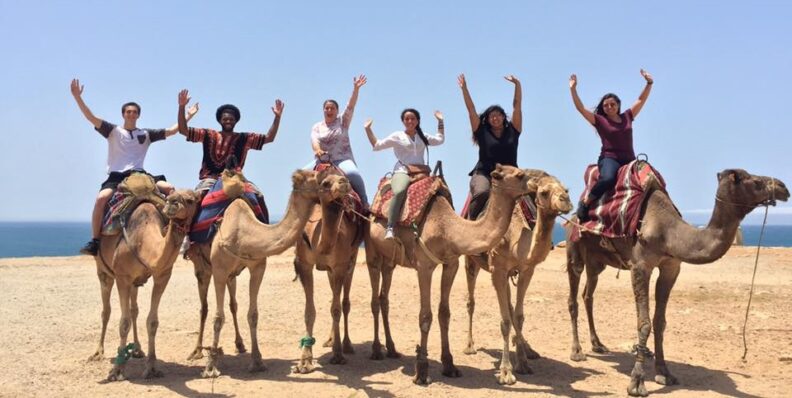
One of the programs that has generated excitement among many WSU first-gen students is First Gen Abroad, established in 2014. In light of WSU data recently revealing that only six percent of WSU seniors who studied abroad were first-gen students, First Gen Abroad aims to increase those numbers. While open to all undergraduate students from all academic majors and WSU campuses, the vast majority of participants are first-gen students.
According to recent studies, some of the benefits associated with study abroad experiences include higher GPAs and higher degree completion rates, as well as personal growth and a deeper understanding of different perspectives, which come from encountering new places, cultures, art, languages, ideas, and interacting with their people. First Gen Abroad is doing just that, sending students to Italy, Spain, Portugal, Costa Rica, Morocco, and other countries.
Despite a nearly two-year hiatus during the pandemic, hundreds of first-gen students have participated in WSU programs abroad. One such WSU student, Christopher “Chris” Navan ’13, never thought he would be able to study abroad, mainly because he never imagined he could afford it. An international business major already fluent in Spanish, he had studied elementary Japanese during his freshman year, and though the First Gen Abroad program at WSU had not yet been established, he inquired about a two-month summer Japanese language immersion program at the Osaka Gakuin University. He applied after learning that scholarships were available. He received one—it covered nearly all of the program’s costs and expenses.
From the day he arrived at Osaka Gakuin, Navan and his fellow students took a pledge to only speak Japanese during the intensive nine-credit course, during which they lived and learned with Japanese students enrolled in the university.
“It was overwhelming at first,” said Navan, “but I made huge strides the first two weeks and by the end of those two rigorous months at Osaka, I had learned the equivalent of two years of college Japanese.”
The experience strengthened Navan’s resume upon graduating from college. After a two-year stint at Boeing, he took a position at Amazon, where he managed a division developing gift cards for Japan, overseeing everything from procurement strategy to purchase order management. His knowledge of the Japanese language and culture was truly beneficial.
A desire to help other students
“While the experience has been valuable in my work,” said Navan, “that two-month experience gave me a new respect for the thousands of people who come to this country as immigrants, not knowing the language or culture, but who persevere, learn the language, and become productive members of society.”
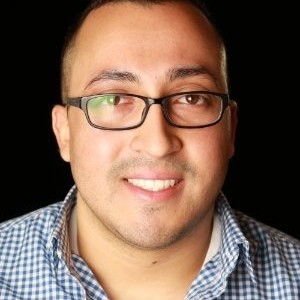
Navan’s experience abroad also sparked a deep desire to give back, and he has given to First Gen Abroad, paying it forward while still young. In addition to his present job as a senior development manager at Kimberly-Clark, Navan launched a startup in his spare time called DRYPT (Don’t relent your pursuit today), an online apparel brand focused on athletic performance and active wear. Through DRYPT, he intends to contribute five percent of the proceeds to support the First Gen Abroad program.
Navan’s desire to give back to the program is, for Loera-Herrera, a meaningful testimony of First Gen Abroad’s impact on students: “It’s one of the gems of WSU, and why we’re so committed to growing the program,” said Loera-Herrera. “I’ve seen for myself students experience aha-moments and stepping out of their comfort zones and expanding their understanding of the world.”
But the need for private donors to step in to fill some of the gaps created by federal and state budget cuts has become all the more crucial. The Office for Access & Opportunity continues to find the funds to help these students participate in First Gen Abroad, including encouraging students to apply for nationally competitive scholarships such as the Benjamin A. Gilman International Scholarship. Last year, four WSU students received Gilman Scholarships but funding and resources are becoming increasingly scarce as costs continue to climb.
“As successful as the program is, the major challenge we have,” said Loera-Herrera, “is that costs keep going up, and it’s so important that we are able to provide scholarships that make programs abroad possible for our first-gen students.”
As WSU enters this new era of federal and state cutbacks with the prospect of continued financial uncertainty in future years, the need for private donors to step in and support these programs is greater than ever.
To give to scholarships for First Gen Abroad, contact Camille Vaughn, director of development for Student Affairs, at camille.vaughn@wsu.edu or at 509-335-8372.