Food Insecurity
Outreach & Programming
The Art of Food: From the Collections of Jordan D. Schnitzer and His Family Foundation
Our food choices carry ethical implications. What we eat affects and is affected by an intricate global food chain. We fight over food. We deny food to some as a tool of suppression and cultural erasure. We fear for our health, the challenge of feeding a growing global population, and the effects of climate change on food production. These topics are especially relevant at WSU Pullman, a land-grant university with research and scholarship rooted in agriculture and food sciences.
Featuring more than 100 works in various media from the renowned collections of Jordan D. Schnitzer and his Family Foundation, The Art of Food showcases how some of the most prominent artists of the twentieth and twenty-first centuries have considered this universal subject. Organized thematically, it uses an artistic lens to examine the subject of food beyond its purpose as body fuel.
Kappa Psi: The Beta Pi Chapter at WSU
Last fall, the Beta Pi chapter of Kappa Psi— the largest and oldest pharmaceutical fraternity, dating back to its beginnings in 1879— volunteered at Second Harvest. There were 21 brothers in attendance who all helped package food for the community. As a chapter, we also participated in packaging 150 boxes of dry goods and 250 grocery bags for Spokane’s Women & Children’s Free Restaurant & Community Kitchen — a vital safety net that fills nutritional gaps for women and children in need. This event helped brothers support the missions and ideals that guide the chapter and ensure the city of Spokane can benefit from the fraternity’s mission.
This enriching opportunity demonstrated the generosity of local farmers and their willingness to donate their produce. The Beta Pi chapter identified the desperate need for volunteers to help organize and package food, which led to their involvement. As pharmacy students, the brothers of Kappa Psi work directly with patients’ healthcare within the community. This opportunity allowed them to provide service beyond healthcare and help provide basic needs that many take for granted. The Beta Pi chapter plans to continue its support at Second Harvest and help the brothers fulfill their mission to serve.
Little Cherry Disease
If Washington State University hadn’t acted four years ago, the sweet cherry industry in Washington would’ve gone bust from “Little Cherry Disease,” a simultaneous outbreak of Little Cherry virus-2 and the X-disease phytoplasma. It would have been a devastating blow for the state that produces the sweetest cherries in the country.
Instead, WSU researchers discovered which insects were transmitting X-disease, learning how to rebuild orchards to drive them out. WSU and USDA Agricultural Research Service scientists are researching solutions to questions that are half-a-century old and go beyond the current outbreak.
Though economic disaster was averted, no treatment or cure for Little Cherry Disease has been found. The only remedy for infected trees continues to be immediate and aggressive removal. The WSU Plant Disease Diagnostic Lab and Clean Plant Center Northwest offer tree fruit growers further assistance through diagnostic testing for Little Cherry Disease.
WSU Food Systems Team
Washingtonians are keenly interested in locally produced, high-quality foods, yet those foods are not always accessible for all. WSU Extension’s Food Systems Team leads the way toward equitable and regionally interconnected food systems across the state. Director Marcia Ostrom and fellow Extension educators and researchers support regional farmers and harvesters who produce the quality vegetables, fruits, meats, and dairy products that local residents desire.
Programs like Cultivating Success and Farm Walks feature innovative opportunities for farmers to build more secure and profitable markets or kick off a new food or farming enterprise, while the Washington Food and Farm Finder collaborative helps buyers find local products. These programs help lower the barriers to entry for small farmers and food entrepreneurs and improve food access in underserved communities. Ostrom also continues her work building circular food systems throughout Washington. “It’s a way to source food that is protective of our land, water, people, and ecosystems while reinvigorating local economies and reducing waste,” she says.
Innovative Research & Faculty
AI Research Institute for Agriculture
Led by WSU, the USDA-NIFA Institute for Agricultural AI for Transforming Workforce and Decision Support (the AgAID Institute) is a multi-institutional research institute developing artificial intelligence (AI) solutions to tackle some of agriculture’s biggest challenges related to labor, water, weather, and climate change. Launched by the National Science Foundation and among two funded by the U.S. Department of Agriculture-National Institute of Food and Agriculture in 2021.
Tanya Cheeke, PhD, Associate Professor in the School of Biological Sciences
Cheeke’s research focuses on understanding how changing environments impact plants and microbial communities across scales. She focuses on a group of microorganisms in the plant microbiome called mycorrhizal fungi, which form symbiotic relationships with plant roots. Cheeke’s research examines how symbiotic interactions shape above and belowground communities in response to disturbance and how microbiomes can be tailored to improve plant productivity. Her work spans agricultural and natural systems and bridges both basic and applied science. Her team comprises a diverse group of undergraduates, technicians, and graduate students at WSU.
Melissa Vera, PhD, RN (Tsm’syen And Yaqui First Nations), Assistant Professor in the College Of Nursing and The Institute For Research And Education To Advance Community Health
Vera focuses her research on food sovereignty, Land-based healing, and planetary health among Indigenous populations (in the US, Canada, and New Zealand). Indigenous Food Sovereignty (IFS) is directly linked to the health of Indigenous Peoples and the planet, as it is the right of Indigenous Peoples to access culturally appropriate and healthy foods and encompasses the essential reciprocal and sustainable relationships of humans, food, and Mother Earth. IFS creates food security because of these reciprocal and sustainable practices, which are carried out with the utmost respect for our place and responsibilities in the web of life.
Model Conditions: Water–Energy–Food
For more than 75 years, Washington State University researchers have created models for hydroelectric power plants along the Pacific Northwest’s Columbia River and around the world. Today, WSU researchers like Jennifer Adam are developing advanced computer models to assess how future economic and environmental conditions will affect water supply, hydropower generation, and agricultural productivity.
Precision Farming and Ag Robotics
From drones for agricultural pest management to autonomous weeders, irrigation, and temperature sensors that anticipate drought, and milking robots, commercial ag robotics sales are projected to increase nearly 20% each year.
Washington State University’s Center for Precision Agriculture and Automated Systems (CPAAS) is at the forefront of ag robotics research that spans disciplines like engineering, economics, computer science, and horticulture. The center also works to create a more sustainable and resilient agricultural industry in Washington state through education and outreach.
With farmers facing rapidly rising labor costs of nearly 50 percent in 2023, CPAAS is studying automation solutions that decrease labor use and associated costs while increasing food quality and production. These solutions keep workers safe from heat waves or chemical exposure during spraying. It’s a win-win for an industry with tight margins.
Connecting the dots through academics, research and development, and outreach, CPAAS optimizes precision farming techniques for different crops and extends these methods and technologies to the state’s food producers and technology providers. By accessing real-time data from the fields, orchards, and pastures, producers use less water, chemicals, and labor, resulting in safer working conditions, a healthier environment, and more affordable foods for all.
Washington Soil Health Initiative
Professor and Washington State University Extension Specialist Chris Benedict thinks about the critical role of soil as a natural resource every day.
As the faculty leader for the Washington Soil Health Initiative (WaSHI), Benedict works with colleagues at WSU’s Center for Sustaining Agriculture and Natural Resources and the Department of Crop and Soil Sciences to partner with agricultural industries, other state agencies, environmental constituents, and non-governmental organizations to lead the state forward on soil research, outreach, and best practices.
“Improving soil health is universally accepted by a diversity of interest groups,” Benedict said. “There are few issues where so many stakeholders come together and readily agree.”
In 2018, the Washington State Legislature approved long-term agroecological research and Extension sites across Washington state, with the first located at WSU’s Northwestern Washington Research & Extension Center at Mount Vernon. WSU, the Washington State Department of Agriculture, and the Washington State Conservation Commission work together to spearhead this effort and have developed a roadmap that will guide future research for each of Washington’s primary agricultural soil regions.
WSU Soil to Society Program
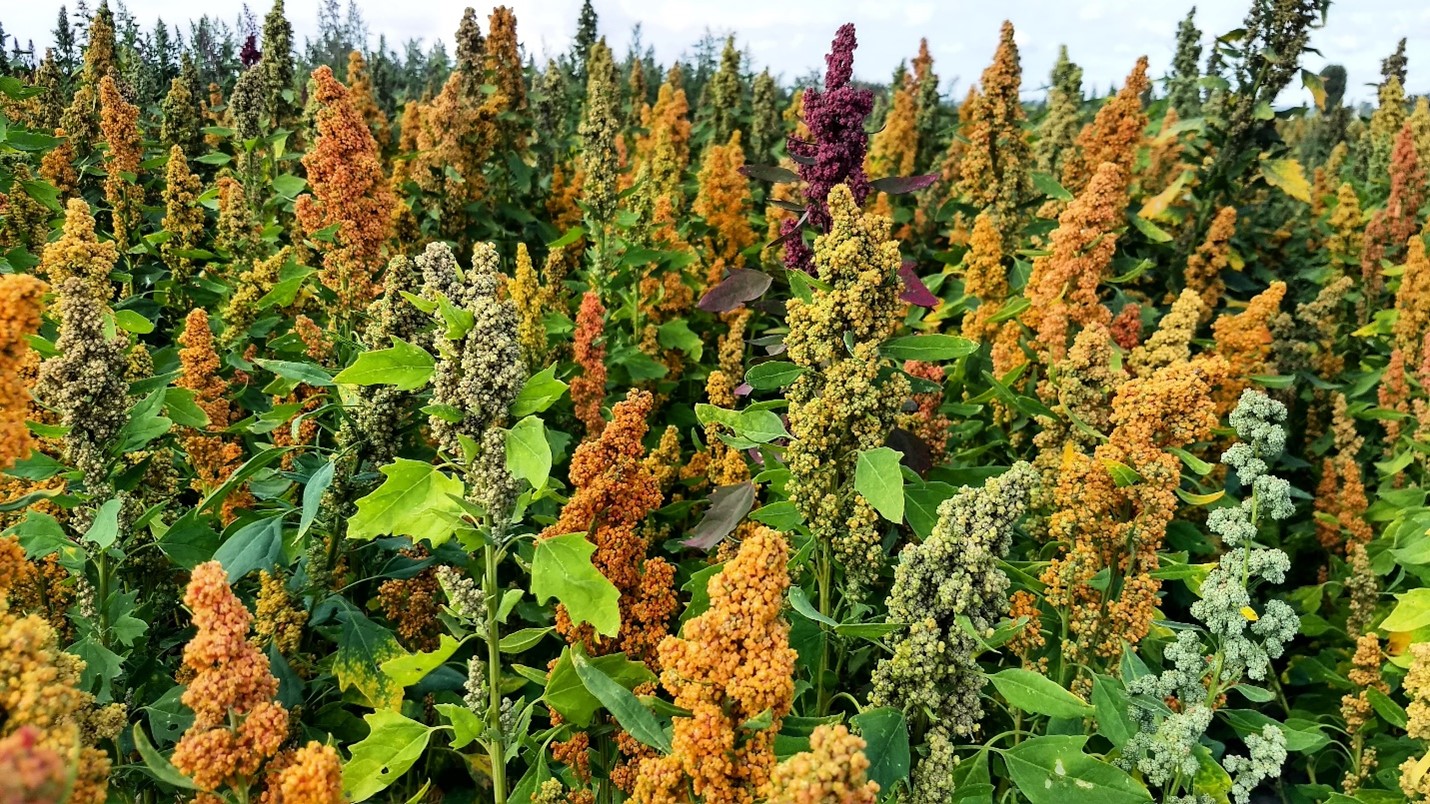
Washington State University’s Soil to Society program is breeding new cultivars of wheat, barley, peas, lentils, buckwheat, and quinoa, a boon to dietary diversity that also boosts the nutritional content of these grains and legumes.
The multidisciplinary project draws on expertise from the WSU School of Food Science, which has developed a new pancake mix with regional buckwheat millers. Assistant Professor Deirdre Griffin LaHue in the WSU Department of Crop and Soil Sciences is leading experiments on different soil management practices, then assessing crops’ nutritional properties. WSU Elson S. Floyd College of Medicine’s Franck Carbonero, associate professor in the Department of Nutrition and Exercise Physiology, is leading the human health and nutrition portion of the research.
WSU Extension specialists statewide are helping develop new markets for the underutilized whole grains, making these nutritious foods accessible and convenient for everyone. In the coming months and years, be on the lookout for new grain and legume products throughout Washington, as Soil to Society helps reintroduce new breeds to chefs, brewers, public schools, grocery stores, and farmers markets.
Scholarships & Student Support
Cecily Kahl Nyberg Endowed Scholarship in Home Economics
Providing one or more scholarships to WSU students studying dietetics with demonstrated financial need.
Charles Glen King Graduate Fellowship and Lectureship Fund in Nutrition
Providing annual fellowship awards to graduate students in nutrition and a special lectureship on advanced topics in nutrition.
Charles T. and Eleanore D. Meenach Scholarship in Human Nutrition
Providing one or more scholarships to WSU students studying human nutrition.
Dean C. Fletcher Graduate Fellowship in Clinical Nutrition
Supporting graduate students conducting research in clinical or community nutrition.
Cougs Feeding Cougs
Cougs Feeding Cougs organizes food insecurity efforts at WSU Pullman as a multi-prong approach, including the food pantry, meal-swipe programs, meal recovery efforts, and in-person assistance. Specifically, the Cougs Feed Cougs Advisory board ensures that the food pantry’s schedule, allocation of resources, and provisions of the pantry support the interests of WSU students as the primary priority while also contributing to other shareholders across the community.
Gladys E. Cooper Jennings Student Scholarship Account
Providing scholarships to students enrolled in the nutrition and exercise physiology department.
Grace Severance Shugart and George Severance Dietetics Endowment
Providing one or more scholarships to WSU students studying human nutrition.
Honor Student Advisory Council
The WSU Honors Student Advisory Council hosts Free Food Fridays on the first Friday of every month. From Panda Express to a cereal bar, each month offers a new theme and the chance for students to drop in for a free meal. The HSAC also holds an annual Yule Ball—a formal dance in the honors lounge—with all the proceeds going to charity. This year’s Yule Ball will benefit the WSU Pullman Cougar Pantry.
Lamb Weston Cougar Cupboard (WSU Tri-Cities)
The Lamb Weston Cougar Cupboard serves to provide WSU Tri-Cities students and their families with reliable access to sufficient food for a healthy life.
M. Virginia Schafer Research Fund in Human Nutrition, Dietetics and Exercise Physiology
Supporting graduate research in the areas of biochemical nutrition and human metabolic work including dietetics and exercise physiology.
Mildred Jean Chambers MS CPD Endowed Fund
Providing financial support to students enrolled in the Master of Science coordinated program in dietetics, nutrition, and exercise physiology who are pursuing the registered dietitian nutritionist (RDN) credential.
Ruth Lenore Harris Nutritional Endowment
Supporting dietetics education within the State of Washington to increase the public’s knowledge of good nutrition and the importance of same to the well-being, happiness, and productivity of all citizens of the state.
Hillers Endowed Fund to Support Research and Education in Nutrition and Exercise Physiology
Providing funding for research and education for nutrition graduate students.
WSU Vancouver Start Kits
WSU Vancouver strives to destigmatize food insecurity by providing every incoming student with a “Starter Kit” at orientation. By providing each incoming student with a starter kit, we ensure they have essential tools and supplies to prepare healthy meals, such as a can opener, spices, and seasoning.
WSU Vancouver Basic Needs Navigator
The Basic Needs Navigator helps students navigate benefits and develops WSU Vancouver’s Hunger-Free and Basic Needs Strategic Plan. The Basic Needs Navigator also conducts outreach and recruitment that targets students with low incomes and students experiencing food insecurity, counsels students regarding access to Basic Food (SNAP) assistance, and develops support strategies for reducing student food insecurity.
WSU Everett Student Support Fund
The WSU Everett Student Support Fund is there for when students experience a financial crisis that could prevent them from continuing their education. This Fund helps provide emergency financial support for students in unexpected situations.
WSU Global Campus Cougar Food Fund
Online students experience food insecurity just like those on physical campuses, but they don’t have access to on-campus food pantry locations. Global Campus is committed to addressing food insecurity among its students. We launched our Global Campus Food Pantry Initiative in 2020, a crucial period coinciding with the health and economic challenges brought on by the COVID-19 pandemic. Since that time, we have been able to assist an average of 300 students per semester.
Each month, we disburse reimbursements for grocery expenses to eligible students. These students, facing financial hurdles and food insecurity, have found support through the Global Campus Food Pantry Initiative. Reimbursements, which typically total from $5000 to $10,000 per month, ensure that students have access to nutritious meals and can concentrate on their studies without the burden of hunger.
WSU Pullman Cougar Pantry
The Cougar Food Pantry is a fully stocked pantry that provides free food and basic needs items to Pullman students experiencing food insecurity. The pantry stocks non-perishable pantry staples that let students create nutritious, filling meals and snacks.
WSU Spokane Student Campus Pantry
The WSU Spokane Student Campus Pantry is a resource open to all WSU Spokane and EWU Spokane Students.
WSU Vancouver Cougar Pantry
We know that it can be hard to make ends meet when you’re paying for college and living on a tight budget. The Cougar Food Pantry provides free, nonperishable items to students needing food. The Cougar Food Pantry can only serve currently enrolled WSU Vancouver students and Clark College Nursing program students studying on the WSU Vancouver campus.