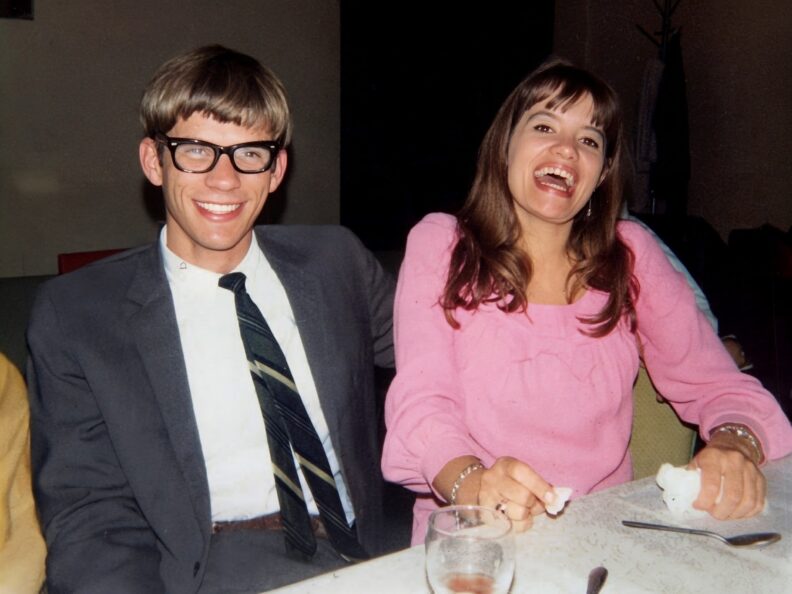
When Gerald “Gerry” Edwards left his family’s tobacco farm in rural Virginia, he didn’t know his journey would reshape the world’s understanding of photosynthesis. What he did know was that he loved learning, hard work, and listening to people’s stories. Those qualities, aided by the constant support of his beloved wife Sandy, carried him from a modest upbringing to an internationally celebrated career at Washington State University, where he spent more than three decades advancing plant science and mentoring future scientists.
When Gerry passed away in July 2025—eight years after losing Sandy—Sara and Chris Edwards wanted a meaningful way to honor their parents’ legacy. They chose to create the Gerald and Sandra Edwards School of Biological Sciences Excellence Endowment, ensuring that the values Gerry and Sandy lived by—curiosity, collaboration, and service—will continue to flourish at WSU.
From farm fields to global impact
Gerry’s path to plant science has its roots in farming. “It wasn’t like as a 10-year-old on a farm helping his family grow tobacco, he knew that he was going to be a researcher,” Sara recalls. “He was just so present and curious. His teachers saw an intellect in him. He kept being invited, like, ‘Hey, you should go to community college.’ ‘Hey, you should go to this other institution.’ ‘Hey, you should go do this research with this person in these other cities.’ He went from place to place to place, on the referrals of people who respected his work ethic. So, I think he had a pretty organic path.”
After stops at Virginia Tech and the University of Illinois, that path eventually brought Gerry to UC Riverside and Sandra Gee. “Education brought them together,” Sara says. “They met in a cafeteria, he took her to a dance, and the rest is history.”
After postdoctoral work at the University of Georgia, Gerry joined the faculty at the University of Wisconsin–Madison before moving to WSU in 1981 to chair the Department of Botany. Over the next 32 years, he built a globally renowned research program. His work on C4 photosynthesis—a process that turbocharges plants’ ability to convert sunlight and carbon dioxide into energy—helped explain how some species thrive in hot, dry environments, and holds potentially profound implications for agriculture.
“Gerry’s research showed how plants could be more efficient—increased nitrogen efficiency and increased water-use efficiency,” says Berkley Walker, now an associate professor at Michigan State University and one of Gerry’s former mentees. “There is a lot of energy involved in the first step of photosynthesis. If you can turbocharge that by concentrating the CO2, the implications would be huge.”
“He was the gentle giant of photosynthesis,” says Asaph Cousins, professor and director of the School of Biological Sciences at WSU. “His impact is only matched by a handful of people in the world.”
Over the course of his career, Gerry published nearly 400 peer-reviewed papers, earned Guggenheim and Fulbright fellowships, and was named a Highly Cited Researcher—placing him among the top 0.5 percent of plant scientists globally. He was also named a Distinguished Faculty and Regents Professor at WSU and a Fellow of the American Association for the Advancement of Science. Yet colleagues remember him more for his humility than for his accolades.
“Gerry’s impact far outreaches his ego,” says Cousins. “As chair, he built a community of scientists. He seemed to have unlimited time. He would stop and talk to people and work things out. He was a great mentor for both graduate students and faculty.”
Walker echoes the sentiment. “He’d get a mug of hot water, and then you’d sit down with him. He’d sip from his mug, eat a Snickers bar, and draw out the process you were discussing.”
A true partnership
Behind Gerry’s success was Sandy, his steadfast partner in both life and work. Sandy Edwards considered her primary role to be supporting her family, but her contributions didn’t end at home. Sandy earned a bachelor’s degree from UC Riverside and shared her husband’s curiosity about the world. As their children grew older, she began spending more time working with Gerry in the lab, gradually taking on responsibilities that became essential to his work.
She began by managing grant paperwork, ensuring timely report submissions, assisting with proposals, and other administrative tasks. Over time, she became the primary point of contact for visiting scientists, arranging housing, furnishing apartments, and creating a welcoming environment for researchers arriving from around the world. Sandy made sure these guests experienced life in Pullman, organizing outings to football games, community potlucks, and holiday celebrations.
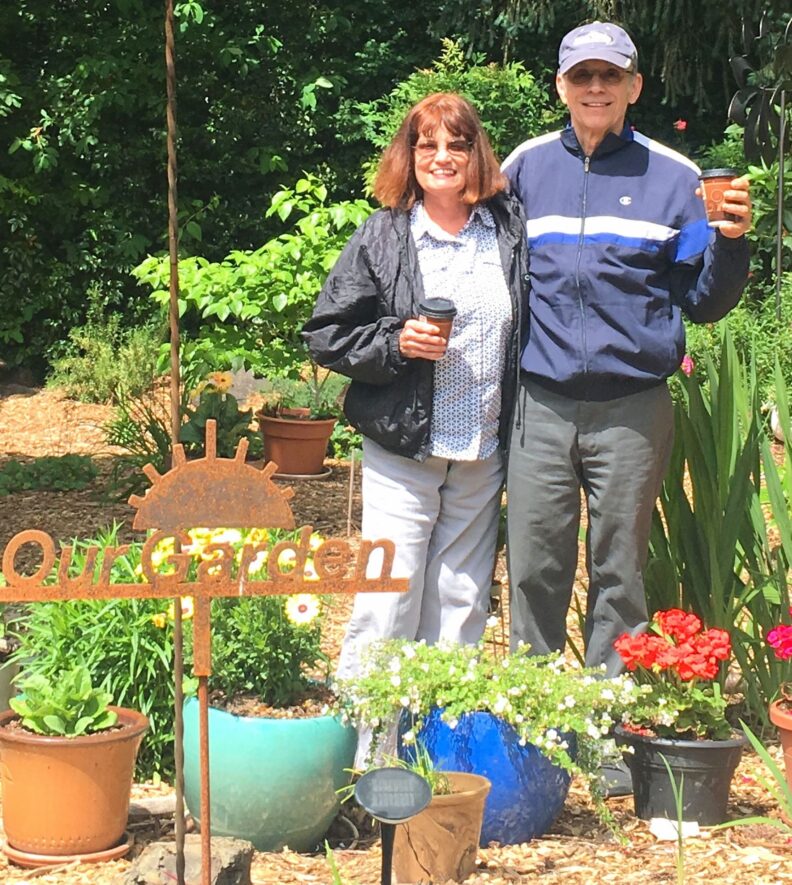
What began as volunteer support evolved into a formal role. For decades, Sandy worked part-time in the lab, becoming an integral member of the team.
“She felt like that was her community,” Sara says. “This was how she could help my dad make sure he was meeting his objectives at work, and also family objectives.”
In 2012, Gerry and Sandy moved to Beaverton, OR, to be closer to their children and grandchildren. Gerry retired the following year. Both remained active in their community for the remainder of their lives.
Why the endowment matters
For Sara and Chris, creating the Gerald and Sandra Edwards Endowment was about more than honoring their parents; it was about sustaining the values they championed.
“We live in a time where I feel like we want to send a signal,” Sara says. “We need to support scientific inquiry, exploration, and collaboration as the foundations for solving the world’s problems.”
The Gerald and Sandra Edwards School of Biological Sciences Excellence Endowment is designed to do just that by providing flexible resources for the School of Biological Sciences, whether that involves recruiting graduate students, purchasing equipment, or matching external grants. Sara emphasized that they trust the department to determine how best to use the funds to continue the work Gerry and Sandy helped build.
“We have a lot of trust in the team that has been assembled at the School of Biological Sciences.”
Carrying a legacy forward
If you would like to make a gift to the Gerald and Sandra Edwards School of Biological Sciences Excellence Endowment, please contact Justin Smith at jnsmith@wsu.edu or visit the WSU online giving page.