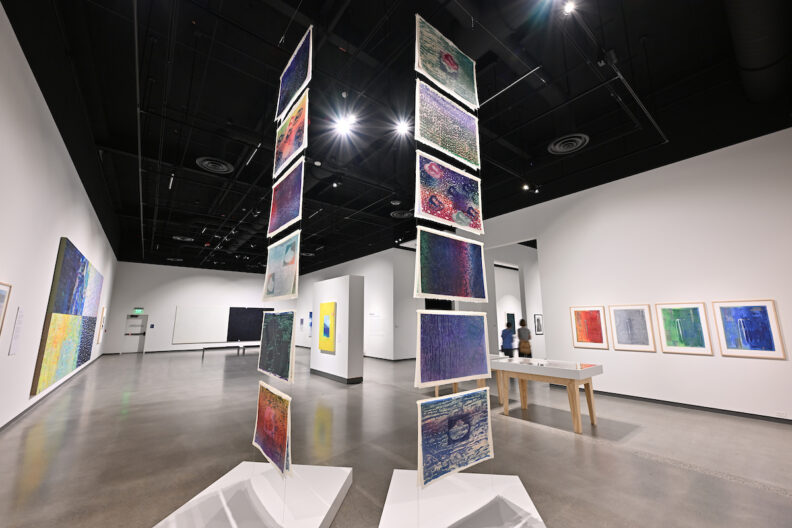
Former Washington State University President Dr. Samuel H. Smith and WSU first lady Patricia W. Smith have long believed that art belongs to everyone. That belief has guided decades of leadership and philanthropy at WSU—and it continues today, through the newly reopened Patricia W. and Samuel H. Smith Collection Classroom at the Jordan Schnitzer Museum of Art WSU (JSMA).
Timed with the museum’s 50th anniversary, the classroom’s reopening honors not just a space, but a visionary legacy. As president and first lady of WSU from 1985 to 2000, the Smiths were instrumental in shaping what the university—and its cultural life—would become. And even now, they still call Cougs “our students,” championing an educated student body, not merely a trained one.
From presidential leadership to artistic stewardship
Dr. Samuel H. Smith’s 15-year WSU presidency (1985–2000) fundamentally transformed the university, establishing its Tri-Cities, Spokane, and Vancouver campuses and laying the groundwork for today’s Global Campus. This statewide vision—bringing WSU to the people—extended to the arts.
“Neither of us was brought up in a city that had a museum,” Pat added. “The concept of visiting a museum and broadening horizons, and learning about all kinds of art, was something we found fascinating.”
That shared passion found a lasting home at JSMA. Pat became a docent at the original museum in 1985, leading tours and forging close ties with artists and curators. Sam, even amid presidential duties, famously dashed to the museum during football halftimes to check in with staff, a symbol of his belief that art and academia are inseparable. For both, art was never a side interest—it was central to education, understanding, and community.
Building bridges: Art, technology, and global mindsets
Today, twenty-five years after their time in Pullman, the Smiths’ vision for WSU remains rooted in a belief that every Washingtonian should have access to world-class education, no matter where they live. In 2022, they made a naming gift to establish the Patricia W. and Samuel H. Smith Collection Classroom, a state-of-the-art space designed within the Collection Study Center (CSC) to bridge traditional art study with new technologies.
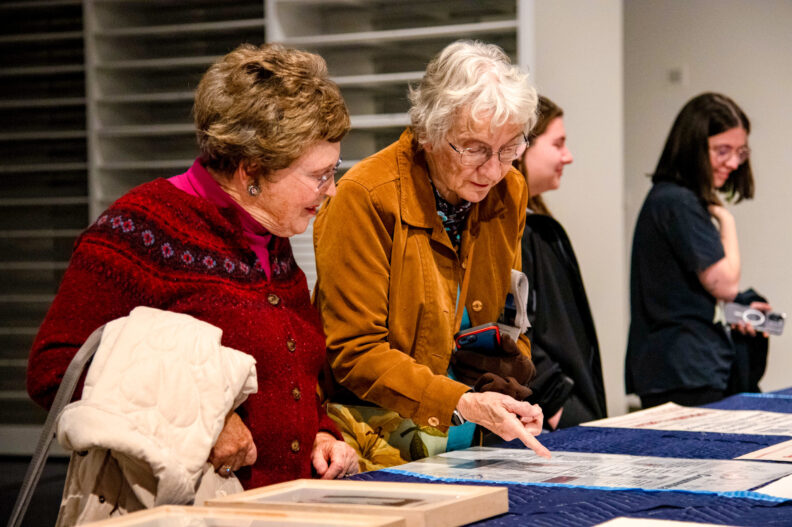
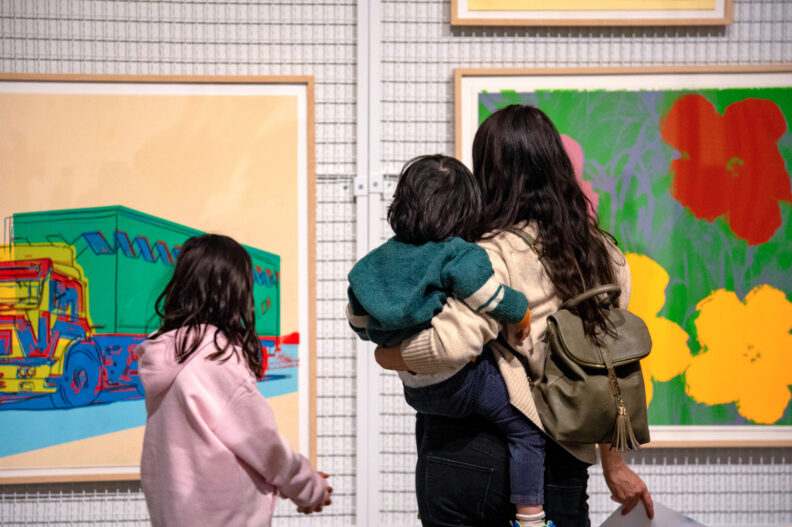
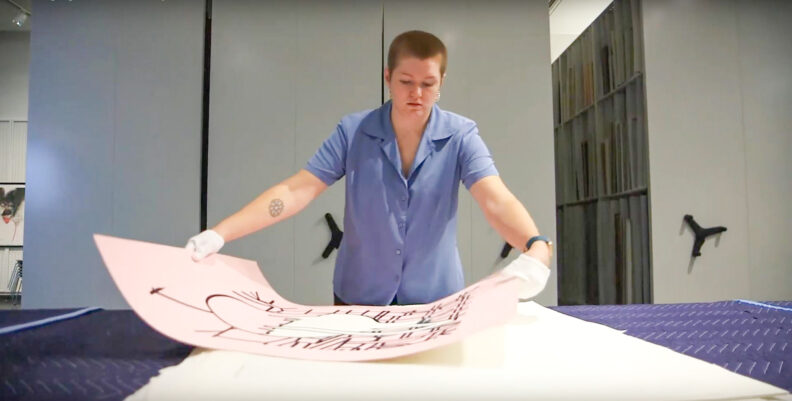
This unique classroom will allow students to meet and explore significant works in the museum’s collection, including pieces ranging from photos by Andy Warhol to paintings by European and American Impressionists, while being joined on Zoom by curators and historians from anywhere in the world. Classroom connectivity allows the CSC to reach the entire WSU System, including the WSU Global Campus, while dedicated computers expand collection access, allow for object comparison, and improve staff workflow.
After water damage delayed the classroom’s original opening, the Smiths remained committed. They supported repairs, ensuring the space could fulfill its promise: to bridge traditional art study with 21st-century technology, reaching every corner of the WSU system.
Why art matters—now more than ever
In an era of tightening budgets, the Smiths’ continued investment in the arts is especially meaningful. Studies have repeatedly shown that engaging with art reduces stress, sparks creativity, and fosters cross-cultural understanding—a critical skill in our interconnected world.
Sam, whose career spans 52 countries, emphasizes global fluency: “Wherever I go to a country, I always try to have dinner at home with somebody there because their culture and art are so different from ours, but also because it’s not so different than ours.”
“Our students need to understand the whole concept of appreciating different cultures to be truly educated,” Pat added. “It’s not that you just grow up in your area and stay there anymore. Some certainly do that, but others will have jobs where they’ll be interacting with people all over the world.”
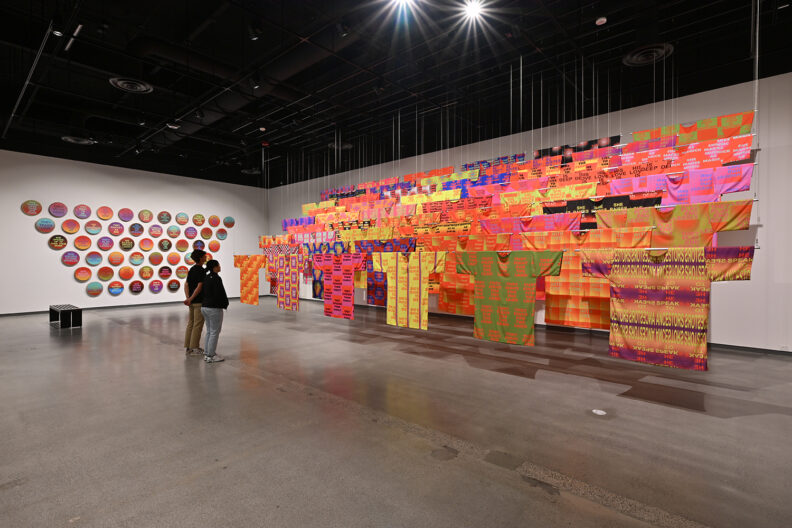
This same mindset drives JSMA’s programming, from Indigenous beadwork exhibitions to explorations of math-inspired sculpture.
A ripple effect of generosity
The Smiths’ generosity has touched nearly every corner of JSMA. In 1993, they established the Samuel H. and Patricia W. Smith Arts Endowment to support exhibitions and grow the collection. Over the years, that gift has helped make possible a wide range of special exhibitions, from A Song to the Creator: Traditional Arts of Native American Women of the Plateau to the recent Beyond Hope: Kienholz and the Inland Northwest, which explored the work of renowned artists Ed and Nancy Kienholz. The fund likewise helped the museum acquire the major works displayed in the Samuel H. Smith Center for Undergraduate Education. Pat and Sam also played a lead role in fundraising for the new museum and served as longtime advisory council members until relocating from Seattle to Pennsylvania in 2020.
They also helped spark the museum’s first philanthropic friends group and, most recently, contributed to JSMA’s 50th-anniversary commemorative book. Their philosophy of giving is simple, Sam says: “Make it their museum. You have to build the community. Then it becomes theirs.”
That mindset has had a ripple effect.
“Pat and Sam showed how both modest and significant gifts, sustained over time, create momentum,” said Ryan Hardesty, executive director of JSMA. Today, the Smith Endowment supports nearly every exhibition—ensuring that the museum continues to thrive, even in lean times.
Looking ahead: A call to Cougars
As WSU celebrates half a century of the Schnitzer Museum, the Smiths’ contributions shine as both foundation and future. They’ve ensured that art at WSU remains not just preserved, but lived—part of daily experience, academic inquiry, and community.
“Exhibitions are our primary way of improving education and the student experience here at WSU Pullman,” Hardesty said. “They allow engagement through the lens of art. But there’s also something less tangible—a sense of well-being, magic, and poetry in your life. That goes a long way toward student and community health. Pat and Sam have helped make that possible.”
Just as the Smiths once brought WSU to the people of Washington, the classroom that bears their name—and the exhibitions they’ve made possible—now bring the transformative power of art to the people of WSU. One visit, one lesson, one connection at a time.
To learn more about how you can support the Jordan Schnitzer Museum of Art WSU, contact Kira MacPherson at kira.walters@wsu.edu or 509-335-4748.