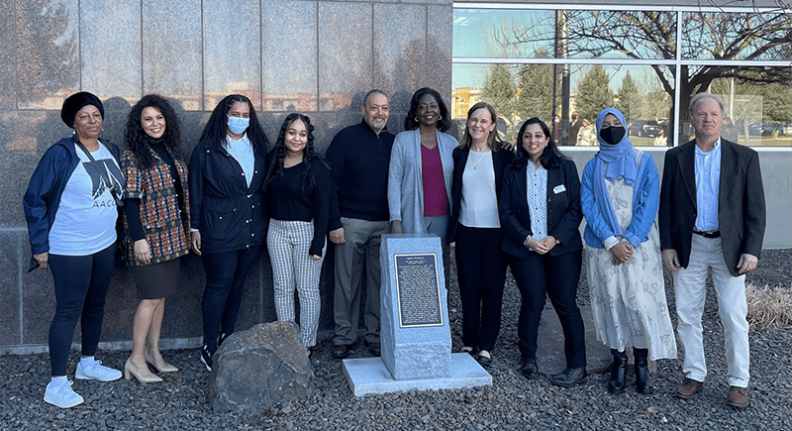
The African American Community Cultural Education Society (AACCES) has endowed two scholarships at WSU Tri-Cities, honoring civil rights leader Dr. Martin Luther King Jr. and William Owen Bush, a pioneering African American legislator instrumental in founding WSU.
Nineteen-year-old Tommy Moore left Texas in 1939 for the Pacific Northwest in search of a better life, first finding work in a Seattle restaurant before landing a good-paying job in 1943 at Hanford as part of the railroad survey crew. Then, after serving in the US Army, he returned to Pasco, WA.
CJ Mitchell, another young Black man from Texas, first came to Pasco as a 16-year-old in 1947, following two uncles. After a construction job ended, he returned to Texas to marry his high-school sweetheart, Bernice. Soon, the newlyweds left Texas for good, CJ taking his new bride to Pasco.
Fast forward to the next generation: Leonard Moore, son of Tommy Moore, was born and raised in Pasco, and Vanessa Mitchell Moore, daughter of CJ Mitchell, was born and raised in Richland (her parents moved from Pasco to Richland before she was born). The two met their senior year of high school, fell in love, married, and started their own family. In 2003, they helped establish AACCES (the African American Community Cultural Education Society). Their charter is “to engage the Mid-Columbia Community in improving African American quality of life and increasing awareness about African American participation and contributions through cultural and educational activities and outreach programs.” AACCES recently endowed two scholarships at WSU Tri-Cities.
Tri-Cities African Americans encountered racism not unlike the Jim Crow South
One of AACCES’s first projects involved countless hours conducting and filming interviews with African Americans who had worked to build the facilities of the Hanford Manhattan Project, most of whom came from the South. AACCES wanted to document the challenges they faced and the contributions they made to the Tri-Cities. “It was important to us to tell the stories of our fathers and those African Americans who came here during that time,” Vanessa said.
Tommy Moore and CJ Mitchell encountered racism and segregation at every turn in the 1950s, yet Moore started a successful business in Pasco, and Mitchell secured a job as a chemistry tech at General Electric in Richland after taking night courses at Columbia Basin College. Along with many other Black men and their wives who migrated to Pasco, they were able to establish the foundation of community life—building churches, volunteering at their kids’ schools, founding a local branch of the NAACP, and fighting against the injustices they faced.
Robert Bauman and Robert Franklin, both professors of history at Washington State University Tri-Cities, worked with AACCES on this project. Both professors wanted to learn more about this period of history when hundreds of Black Americans arrived, hoping to find better-paying jobs and to escape the racism and segregation of the Jim Crow South. Instead, according to Bauman, “Nearly all of them faced oppressive segregation and discrimination here as well, not unlike that of the Jim Crow South.”
The work crews, barracks, mess halls, bathrooms, government housing, restaurants, hotels, and businesses, as well as most neighborhoods of the Tri-Cities were segregated. And as Franklin pointed out, “DuPont, the contractor running Hanford, wouldn’t hire Blacks for permanent positions.”
“Fortunately,” said Bauman, “African Americans worked hard to change that. Many in the Tri-Cities, like those in national civil rights organizations, regularly challenged that segregation and discrimination.”
“In spite of such discrimination,” said Vanessa, “our parents always worked hard to make a better life for themselves and for us, and we took advantage of opportunities for work and education, and like our parents, we got involved with schools, churches, civic organizations, and sports associations—helping people along the way. That’s how you make a difference.”
Another way AACCES has made a difference is through supporting education. The Moores and other members of AACCES have experienced the benefits of higher education themselves—Vanessa and several members of her family are WSU alumni. Having experienced the power of higher education to create opportunities and break down barriers, AACCES gifted WSU Tri-Cities more than $130,000 to establish two endowed scholarships for WSU Tri-Cities students.
“These endowed scholarships were born out of AACCES’s long relationship with WSU Tri-Cities,” said Vanessa, “and they will live on in perpetuity. The scholarships are for local students who have demonstrated service to the community. Some of these students are now grandsons and granddaughters of those who came looking for opportunity in the ’40s and ’50s.”
Two endowed scholarships named after two important Americans
AACCES named both scholarships after influential Americans: the first after the Reverend Doctor Martin Luther King, Jr., and the second after William Owen Bush. Dr. King is one of the best-known figures in U.S. history, but who is William Owen Bush?
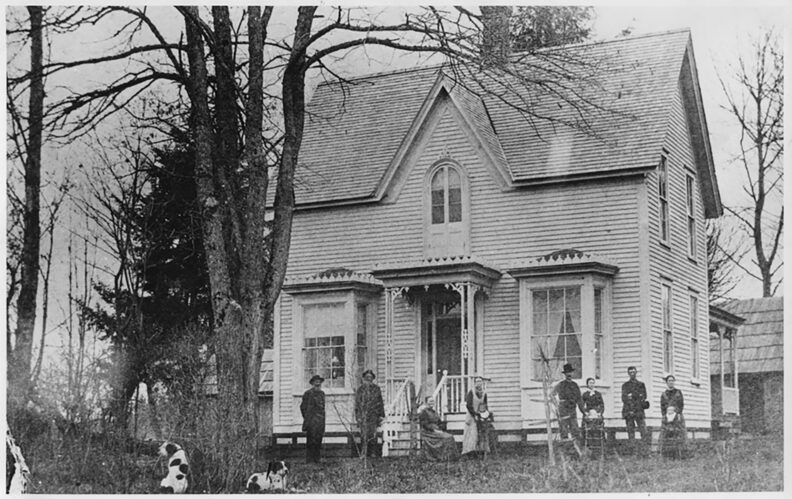
The Moores themselves learned about “Owen” Bush only this past decade and wanted others to know his story, a story that would not have been possible without another remarkable African American, his father, George Washington Bush.
George Washington Bush was born a free man and had fought under Andrew Jackson in the War of 1812 at the Battle of New Orleans. He later worked as a fur trapper and then for the Hudson Bay Company, and later started his own cattle business in Missouri, purchasing 80 acres of land in cash in 1828. But though he was a free man and a landowner who had never been a slave, Missouri, at the time a slave state, did not provide him the same legal status as it did a white man.
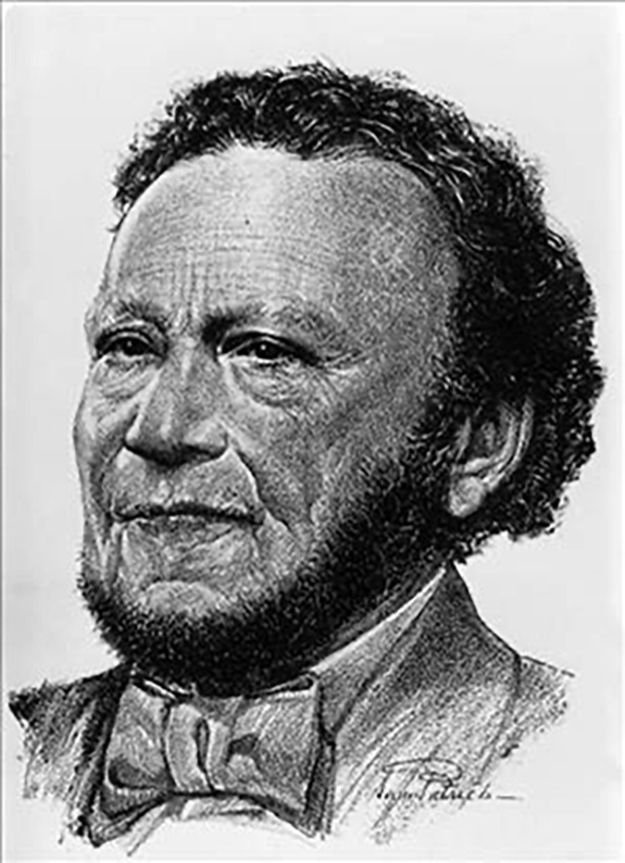
In 1844, George Bush, his wife, and four young sons, including Owen, left Missouri and headed west on the Oregon Trail, seeking a life free from racial discrimination. They made the trip with five white families. Bush generously funded two of those families who could not have otherwise afforded the long journey.
After 16 years of enduring racism and discrimination in Missouri, imagine then his disappointment upon arriving in the new Oregon Territory after their four-month journey to learn racism was at the core of the territory’s laws. Black pioneers were not allowed to settle there. Bush and his family promptly headed north, crossing the Columbia River and establishing a farm in what is now Tumwater.
George’s son Owen eventually took over the farm, where he bred and grew grains that won numerous gold medals in expositions and world’s fairs across the country.
A memorial plaque honoring one of the founders of a great university
When the state of Washington was admitted to the U.S. in 1889, Owen Bush became the first African American elected to serve in its House of Representatives. Bush had two priorities as a state legislator—civil rights and agriculture. On March 7, 1890, he pushed through the state’s first civil rights bill, “An Act to Protect All Citizens in Their Civil and Legal Rights.” The bill brought to the state of Washington the country’s founding idea expressed in the Declaration of Independence: “We hold these Truths to be self-evident, that all Men are created equal . . .” words that at the time applied only to white men.
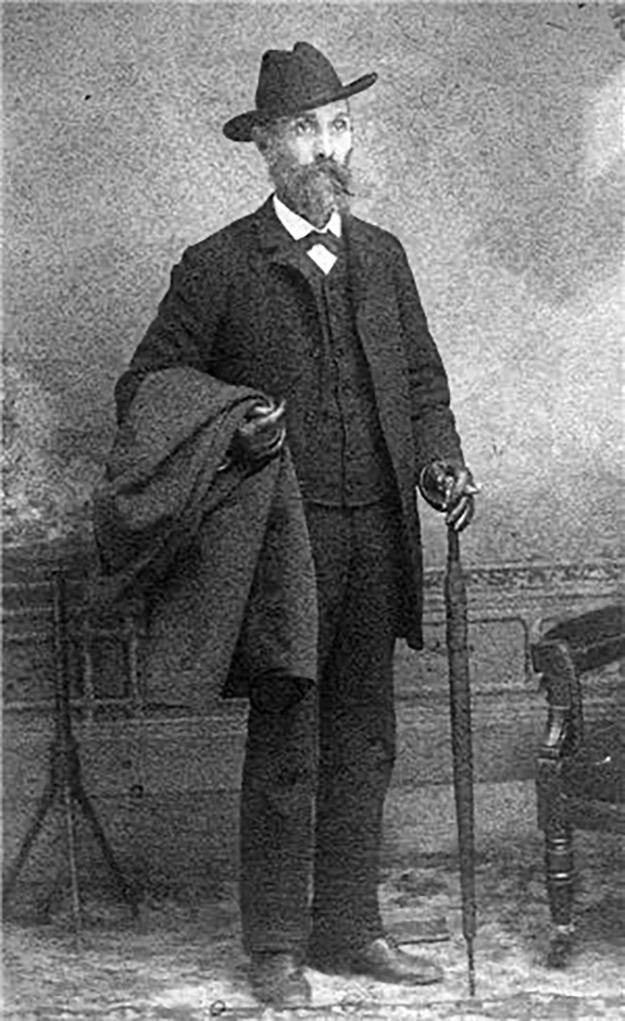
Owen is also remembered for another bill. The day after the legislature approved the civil rights law, Bush pushed through a bill “to establish a State Agricultural College and School of Science,” one of the first public land-grant colleges in the American West. That college became Washington State University.
“We didn’t hear about such men in history classes,” said Vanessa, “though it seems we should have.” To which Leonard added, “But once we learned about the Bush family story, we wanted to tell it to as many people as we could.”
Leonard wanted the entire WSU community to know this American history, and when he learned that a memorial on the Olympia Capitol grounds was erected to honor George and William Owen Bush (dedicated in November of 2021), he suggested a replica of that memorial be installed on the WSU Tri-Cities campus. Chancellor Sandra Haynes and others agreed, and AACCES collaborated with the Washington State Historical Society to install on campus a replica of the memorial honoring William Owen Bush.
All this culminated this past year when Vanessa, Leonard, and AACCES members named the second AACCES scholarship to honor William Owen Bush.
“We’re proud AACCES drove this effort to make people aware of the Bushes’ contributions,” said Vanessa, “just as we are proud about naming one of our scholarships after William Owen Bush.”
“These two scholarships will help make a difference in young people’s lives,” said Vanessa, “and we hope they will go on to make a difference here and in the state of Washington.”
To make a gift to the AACCES Martin Luther King Jr. or William Owen Bush Scholarships, contact Kelly Gabel at kelly.gabel@wsu.edu or at 509-372-7398.