Volunteer Spotlight
“Take a little step outside your norm”
Story by Lisa Raleigh
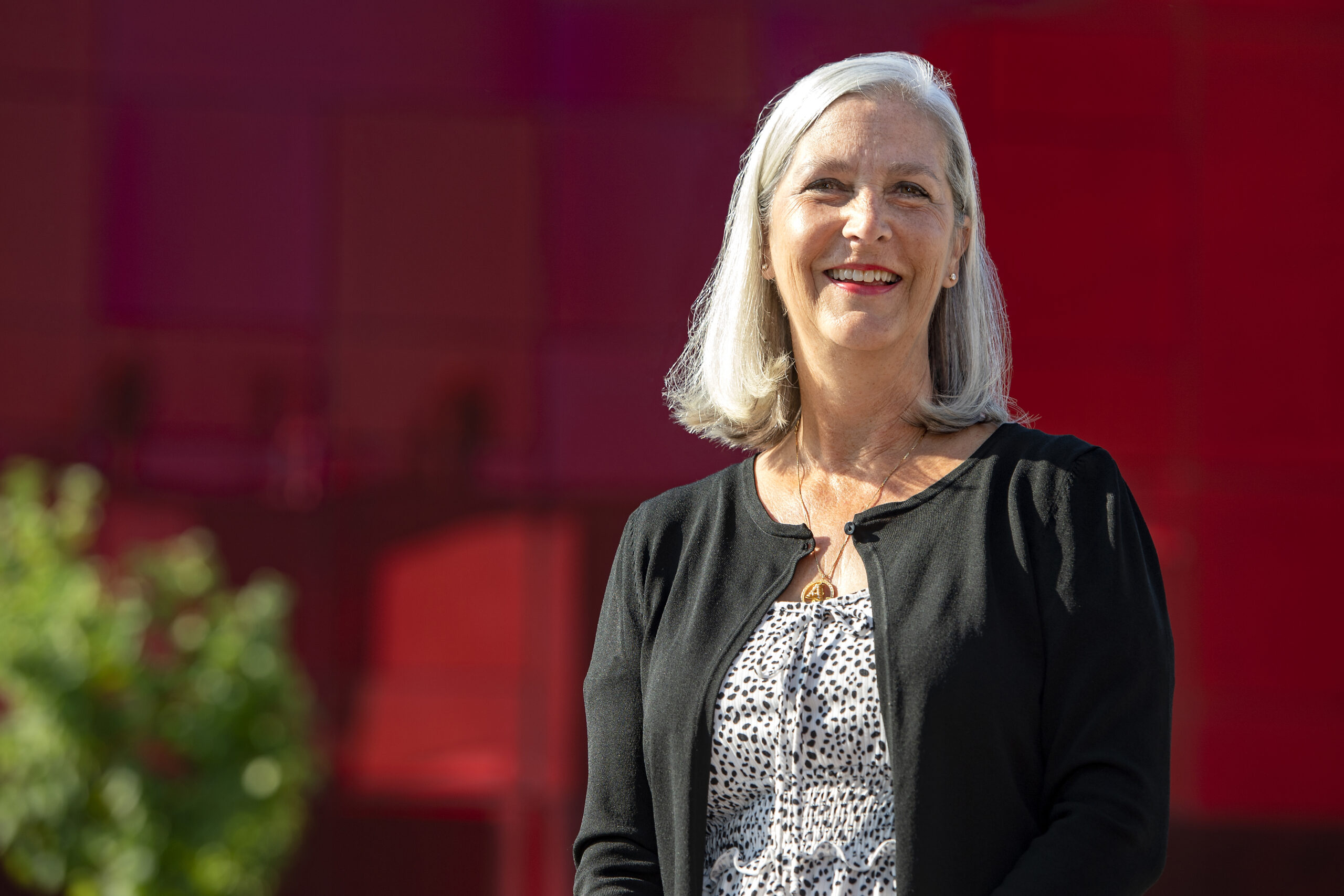
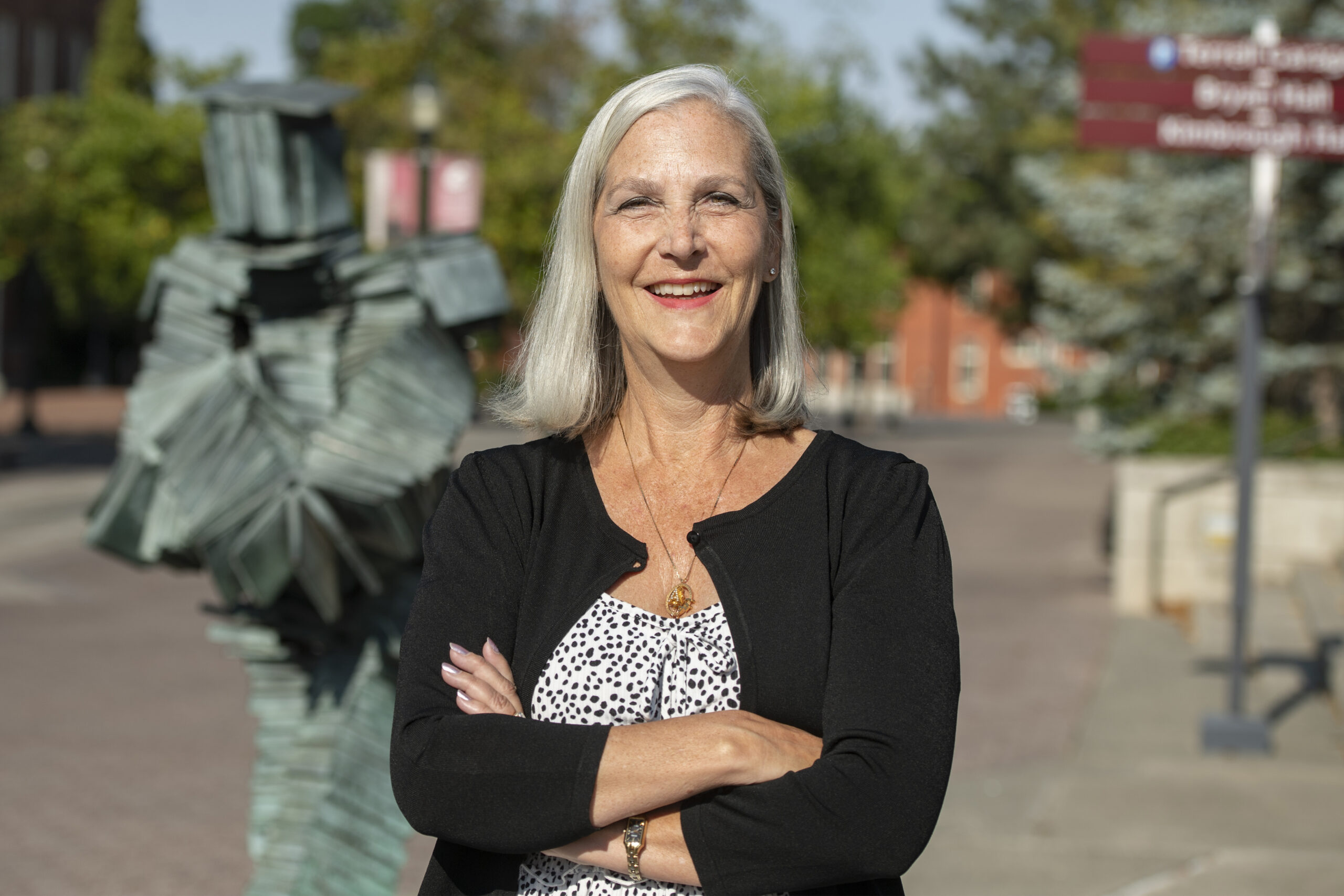
Q&A with Lisa King, chair of the WSUF Board of Directors, who shares her unique path to earning her degree and her perspective on maximizing impact as a volunteer.
Lisa King (’08) is completing her first year as chair of the Board. She met her husband, Jim King (’80), as an undergraduate at WSU, and together they have earned a well-deserved reputation as inspiring leadership donors, volunteers, fervent Cougar fans, and WSUAA Platinum Lifetime Members. Their daughter, Emily, has followed in their footsteps, earning her WSU degree in 2011, and now works in WSU’s Seattle development office for Athletics.
Q: You had an unusual path to earning your degree—by starting your studies in the late 1970s and then completing your degree in 2008. Tell us about that.
Lisa King: I first attended WSU in the fall of 1977 and did the majority of my undergraduate studies, but I had to leave in the middle of my junior year. I always tell everyone that it was because I got my “Mrs.” degree—Jim and I were engaged at that point—but the reality of it was (and not too many people know this) I didn’t have enough money to finish my junior year.
Knowing that we were getting married and, with Jim just a semester away from graduation, I left school because somebody had to pay the bills. There was no scholarship money, there was no financial aid, and that was the right thing to do.
We ended up getting married on the day Jim should have been walking at commencement. But he had a job lined up on the other side of the country, so we moved up the wedding date and got married on that day.
Over the years, I would occasionally go back and take classes here and there, but I just never found a home again—somewhere I felt I was getting what I wanted out of my education.
So, 25 years went by and between my godfather, Wayne Garber, and Tim Pavish, who was then the newly appointed Executive Director of the Alumni Association, both said, “Are you going to finish this? Come on, you’ve only got 30 credits left to go.”
That’s how I got involved with what was then called the Distance Degree Program—now the Global Campus. At that point, Jim and I had already started our company, and I wasn’t looking to complete my degree to go out and find a new job—I just didn’t want to leave this unfinished.
I had a fabulous advisor who first said, “Sorry, but all your business credits are not going to hold after 25 years.” But he laid out a plan for me to get a social sciences degree and it took me three years because I took only one class per semester. I didn’t want to feel overwhelmed, with family as well as job and volunteer responsibilities.
That was my big reconnection back to WSU.
It was also eye-opening to see how WSU needed to upgrade their online programming; some of the curriculum was really old and needed revamping. This led to the first thing I did volunteer-wise for WSU—joining the Distance Degree Program advisory group, created by then-Dean Muriel Oaks, to help make the program better, and also get the message out about WSU’s online program.
Q: Where did your volunteer trajectory take you from there?
LK: Volunteering has always been a part of my adult life. A lot of that owes to my Greek life experience [Alpha Gamma Delta] and the creed among the Greek community: You give back to the community where you live and serve. I had volunteered for the PTA, I had mentored adults who couldn’t read. With WSU, our lead-in to getting more deeply involved was through athletics. We’ve been football season-ticket holders for 30-some years. Also, Jim volunteered and gave back to the College of Engineering and Architecture because of his construction management degree. With Jim involved in this way, I was trying to find my own way, asking myself, well, what were my interests with WSU?
And what I learned was: The more you build relationships, the more you become involved. I am a full believer in lifelong education and the more I find out about something, the more I want to learn. And that’s how I became involved with the College of Veterinary Medicine Diagnostic Challenge.
The Diagnostic Challenge is a program that recruits volunteers to pretend they’re clients, and the students have to diagnose what’s wrong with their pet. This helps the students develop social skills, in addition to the technical skills they need to become a vet. Because, after all, they have to interact with human clients as well as that furry thing (who also happens to be a family member).
Then I was invited to become a Trustee. This was an opportunity to build even more relationships and also learn more about so many other aspects of WSU.
Q: Because you’ve been able to gain a broader perspective as a Trustee, and now as a Board member (and chair) how would you characterize what’s special about WSU, and the contribution it makes to the state and the stakeholder communities it serves?
LK: It’s not only the state and the community—WSU has a global impact. Through engineering and energy processes, through food research and processes, and so much more. I’m extremely proud when I hear about all that WSU researchers have accomplished.
Q: What are your aspirations for how WSU can build on this impact to go to the next level?
LK: My aspiration is that we will no longer be seen as the underdog, that we’re not constantly competing with the school on the other side of the state. There are just as many wonderful things happening at WSU. We just don’t tell our story well enough—namely, that WSU has world-class research and education, and it’s available to anybody who wants it.
Q: Is there an opportunity for volunteers to help move that story forward?
LK: Well, I think, as a volunteer, that’s part of our duty. You don’t have to learn about everything that’s happening throughout the entire university, but if you have a passion about something, find out more about that, and share that story with anybody and everybody who will listen.
Q: What’s your view about the value of volunteering and how both the volunteer and institution benefits?
LK: Many of us probably go into volunteering thinking, “Oh, this is something I have to do.” And there’s nothing wrong with that—I know that I felt that way many times: “I really don’t want to do this, but somebody has to, so I might as well just do it.” But then you find out, wow, I really do like this! And I’ve found through my own volunteering that I have strengths I didn’t know I had.
For instance, I’ve learned that I’m a pretty good leader and I now have the confidence to say, “I can do this.” Volunteering has created who I am today. The relationships and friendships you build—and the skills you gain through volunteering—help create who you are. At the end of the day, when you look back and see you’ve made an impact, it feels really good to know it helped them, and it helped me.
Q: You’ve had a long history of volunteerism but sounds like you weren’t necessarily seeing yourself as a potential leader.
LK: Oh, absolutely not. When I was asked to be a Trustee, I thought, “Ok, that’s cool, why not?” but then when I was asked to be on the Board of Directors, and saw this huge brain trust on the Board, I thought, “I’m just an ordinary me” and hoped that I could contribute in some fashion to making the Foundation and the Board of Directors successful. But my approach is such that, if you want my opinion, you’re going to get it. So, I think that helped identify me as someone who could potentially lead.
Q: What would say to your fellow volunteers in terms going deeper with that involvement?
LK: Take a little step outside your norm. Even to the point where it may feel a little uncomfortable at first, but if you take the chance, it can be rewarding.
I would hope that everybody would remember that we are one WSU. And that we have to open our arms and broaden our horizons. For instance, just because someone may volunteer for the Carson College of Business, that doesn’t mean they can’t have interests in engineering as well. We can cross over. We can help each other to be more successful.
We all want WSU to be the best university in the state of Washington and the Pacific Northwest. We want what is best for WSU because we all have a passion for it.
People ask me why I’m so passionate about WSU. Again it’s because of the relationships I’ve built here. I met my life partner here. I have friends that I met at WSU that are now lifelong friends. You make life connections. And the fact that WSU sits in the middle of wheat fields causes you to be reliant on the community. All of this shows why we always talk about returning to WSU as “going home.”