I-Dec21
Scott SwangerImpact: The Story Behind the Gift
Philanthropy Attuned to Community Need
Story by Lisa Raleigh
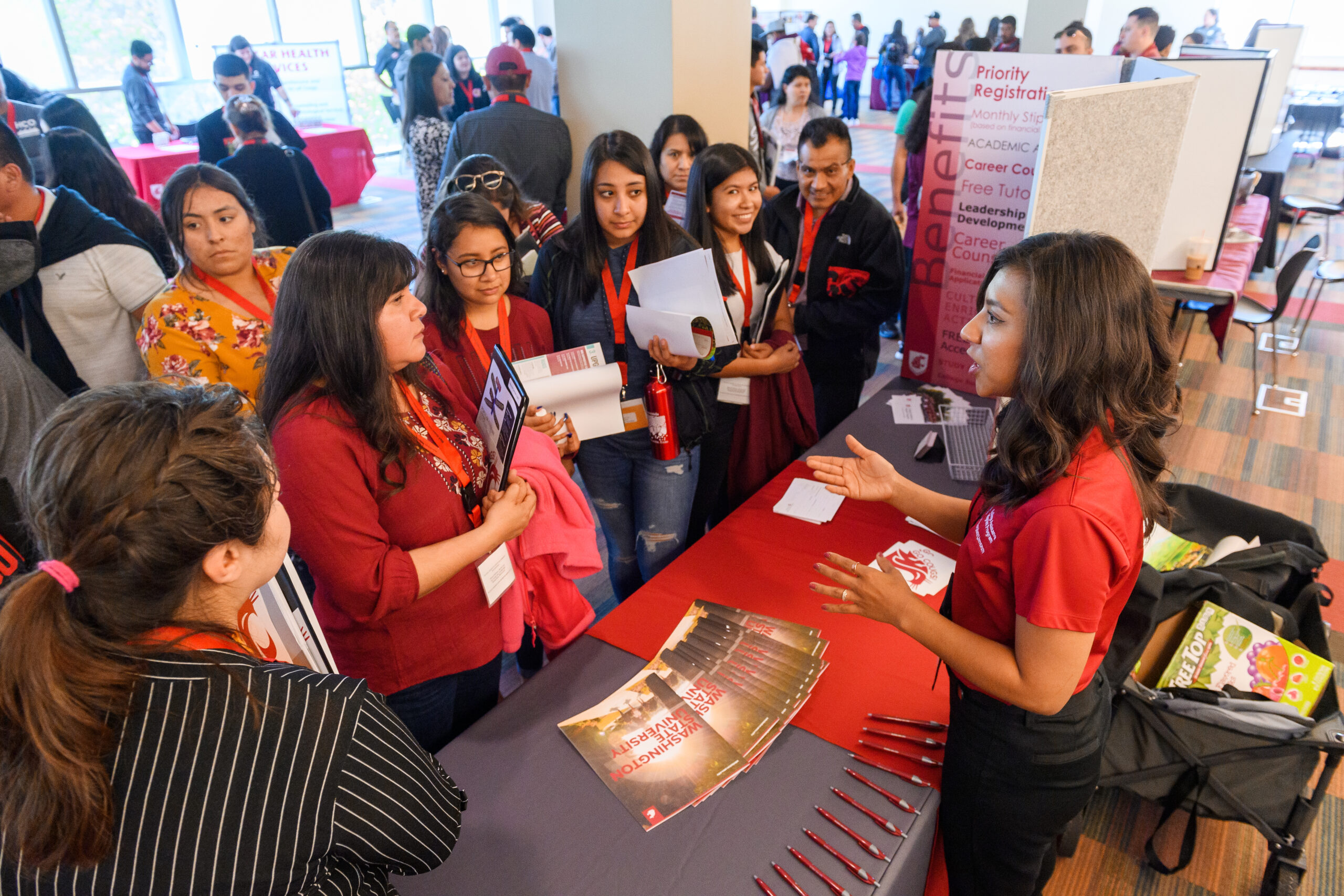
Bob and Karen Felton achieve $1 million in lifetime giving through support of Latinx students.
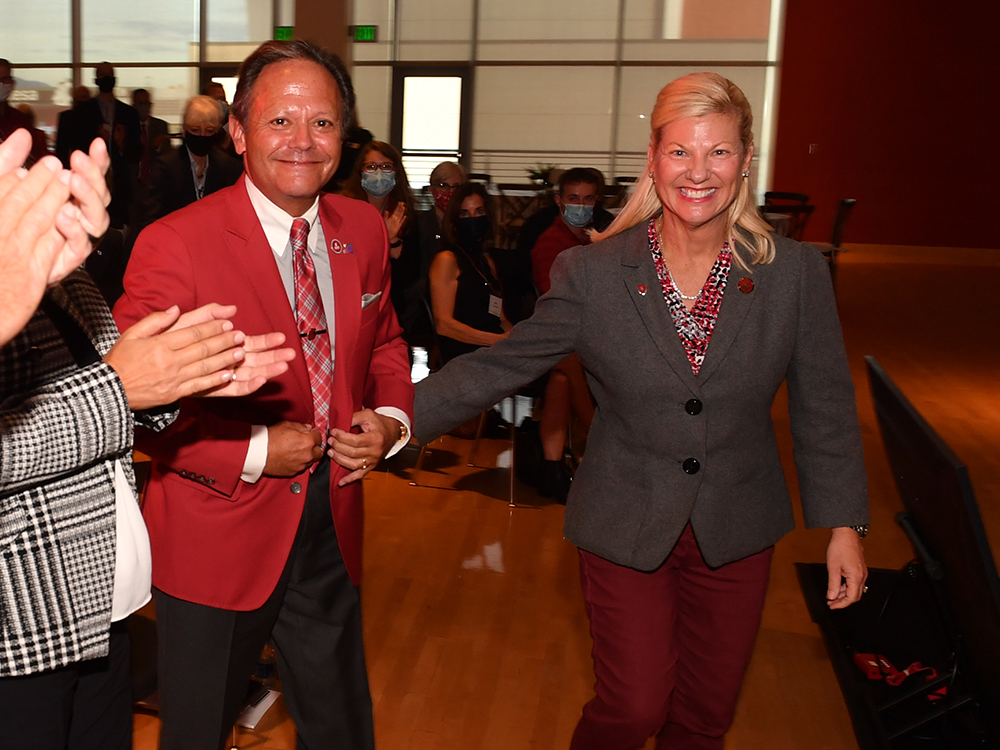
Former WSUF Board Chair Bob Felton and his wife Karen recently made a gift of $600,000 to La Bienvenida (pictured above), a WSU program that brings Latinx students from rural communities—and their families—to campus to introduce them to college life.
Previously, the Feltons had invested in a WSU program that used theater performance to inspire rural Latinx students to set their sights on higher education. The tangible impact of this program impressed the Feltons and underscored the value of investing in these communities.
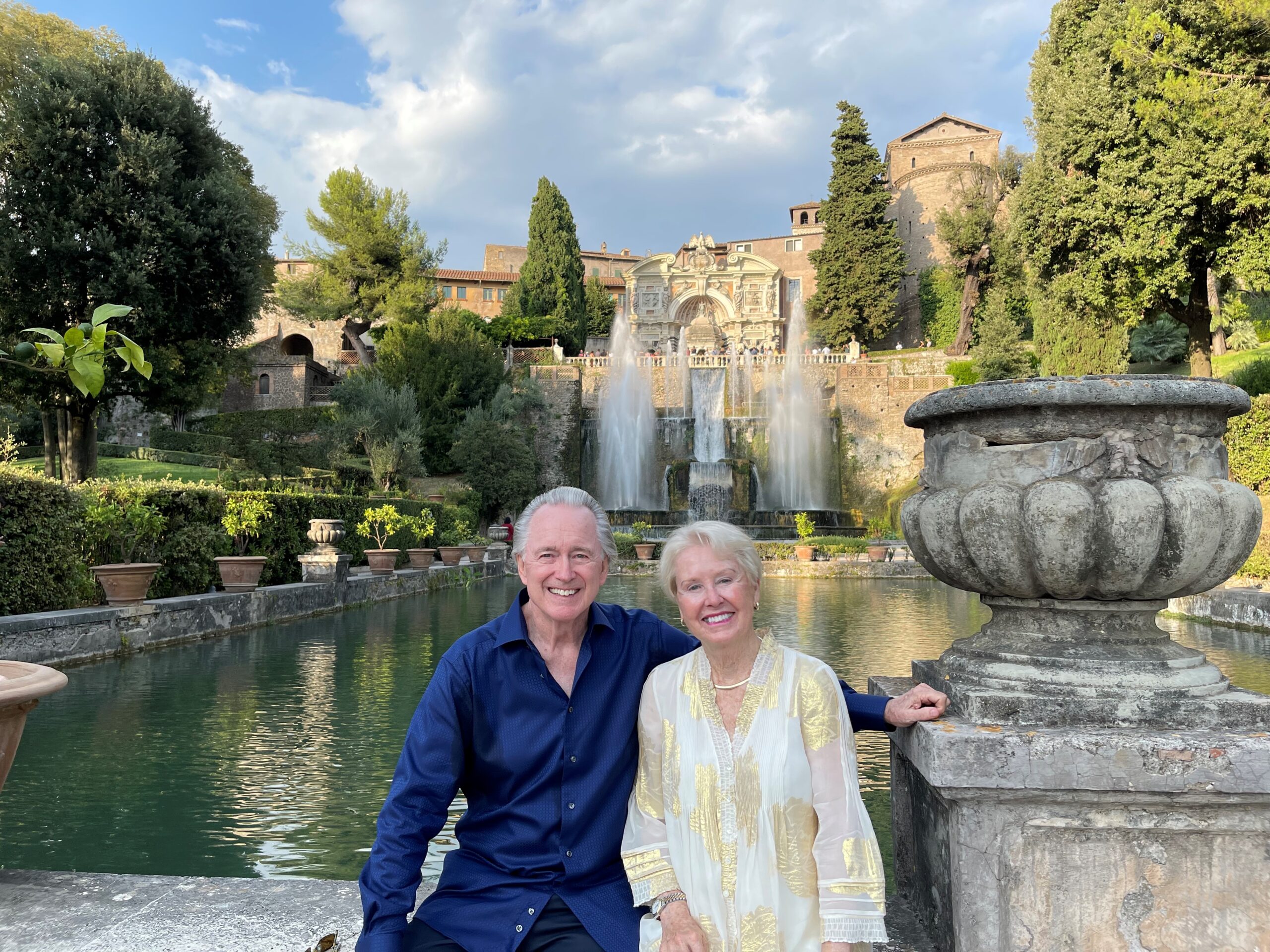
With La Bienvenida, the Feltons are now extending that impact, with a gift that now also brings their lifetime giving to $1 million, or Laureate level. How did support for Latinx students become the Feltons’ philanthropic priority? Here’s the story behind the gift:
Bob Felton grew up in the small town of Warden, on the Central Plateau of Washington, and while he says he grew up poor, he was also aware of those who had less—namely, the Latinx migrants who worked in the agricultural fields near town. Migrant teens did not attend school as Bob’s peers; instead, the Warden High School student body was almost exclusively white, reflecting the year-round permanent population of the town.
Fast forward several decades, and now Warden High School’s student body reflects today’s permanent resident population: enrollment is nearly 80 percent Hispanic (the U.S. Census term), nearly four times higher than the statewide average (23 percent). And only a small percentage of Warden’s Latinx students who graduate go on to college.
This demographic shift was an eye-opener for Bob and Karen when they visited Warden in 2002—Bob’s first trip back to his hometown in more than 30 years. The Feltons had established an “outstanding teacher” award at Warden High School in memory of Bob’s mother, and they drove out to Warden to present this award.
Bob had left Warden for WSU in the mid-1960s. After earning his degree in 1967, he went on to earn an MBA at Harvard Business School, then established a distinguished career as a senior partner with the management consulting firm, McKinsey and Co. His work involved long-term assignments in both Los Angeles and Seattle, as well as Seoul, South Korea. When retirement approached, he and Karen decided to return to Bob’s home state of Washington, and Bob took on a leadership role at McKinsey’s Seattle office.
By the early 2000s, Bob had also become involved as a volunteer with WSU, first as a WSUF Trustee, and then as a Board member, eventually becoming Board Chair, and he and Karen had become philanthropic leaders in their communities.
The “Disconnect” Between Potential and Opportunity
The impetus for the Feltons to fund an outstanding-teacher award in Warden came from a business associate, who told Bob that he had funded exactly this kind of award at his own high-school alma mater in Enumclaw.
Bob’s mother had recently passed away, and he was motivated by his colleague’s example. So, he contacted the superintendent of the Warden School District and arranged to make an annual cash award to an exemplary teacher.
When the Feltons drove out to Warden to present the first award, they learned more about some of the economic and cultural factors contributing to the lack of higher-education opportunities for Latinx students.
And then, when they met with groups of Warden students, they were immediately struck by the “disconnect” between the potential of the “smart, energetic, enthusiastic” students they met, and the lack of opportunities that might help them see themselves as college-bound.
Perhaps most moving for the Feltons was a tradition they observed during the graduation ceremony when their teaching award was presented: Students were asked to stand to indicate the level of education their parents had achieved—third-grade, fifth-grade, middle school, high school, college.
The vast majority came from families with only limited schooling, and this was another factor that added to the mix: Many families had no direct experience with the value of higher education, and in some cases actively discouraged it because they needed their children to contribute to the family income. After graduation, many students went to work in agriculture, in local warehouses, or at the area’s biggest employer, the french fry processing plant.
Telling Their Stories
Inspired by this and subsequent visits to Warden, the Feltons soon made a serendipitous connection with John Fraire, who at the time was WSU’s vice president for student affairs and enrollment. John wanted to launch an innovative program that would offer Latinx students from rural communities the chance to tell their personal life stories through theatre and performance, and the Feltons signed on to fund this unique engagement strategy for several years.
Called Las Memorias (The Memories), the program ran from 2008–2017, and served students from Warden, Mabton, Paternos, Ephrata, Everett, Wenatchee, Walla Walla, and Othello high schools. Students were brought to the WSU campus to learn to produce a theatrical production, which they then toured around the state.
The Feltons were impressed with the impact this program had on both students and their parents. “Engaging the entire family really changed the dynamic,” says Bob. The Feltons saw first-hand how motivating these performances were for not only the student performers and their families, but the community members who attended the performances.
According to a 2019 evaluation of the program, Las Memorias had a significant positive impact on the 100+ students who participated over the years, increasing their confidence, broadening their horizons in terms of post-high school plans, and influencing their decision on which college to attend (including, but not limited to, WSU).
However, the evaluation also noted that more could be done to support students after they enrolled at WSU, to ensure their continued success.
This is where La Bienvenida comes in.
Welcome to the Cougar Family
Launched in 2008, La Bienvenida is both an orientation and retention program for Latinx students.
Designed to directly address the cultural emphasis on family decision-making, La Bienvenida is a two-day immersive, on-campus experience for incoming students and their family members.
The entire family—including parents and siblings—are invited to stay overnight in residence halls, eat in the dining halls, and meet with current students, faculty, and student-services staff, while getting acquainted with campus life and learning what it means to be welcomed into the Cougar family.
“This one-of-a-kind family engagement reduces barriers for students to attend by allaying parents’ fears and uncertainties and giving them confidence that they can turn over their children to the care of WSU, knowing they are well-prepared and well-cared for,” says Victoria Miles, acting associate vice president for principal giving. “Plus, the student’s siblings are also inspired to consider planning for their own college education.”
La Bienvenida currently serves approximately 90 incoming students each year. Data from the first several years shows that students who enter WSU via this program are much more likely to continue their studies and earn their degrees.
After the sunsetting of Las Memorias in 2017, the Feltons had been considering how they might continue to have an impact on Latinx students like those in Warden. A conversation with several Advancement staff and university leadership, including President Schulz, led to a presentation of the potential expansion of the La Bienvenida program, which they found ideally suited their philanthropic priority of supporting communities.
With the Feltons’ most recent investment, the Pullman program will be able to expand to serve as many as 300 students per year, and program leadership will be offering La Bienvenida next year for incoming students at the Vancouver and Tri-Cities campuses as well.
In addition, the Felton gift lays the groundwork for attracting additional grants and private gifts that can continue to take this nationally recognized program to the next level.
Because the Feltons shared with WSU their ideas for benefitting rural communities in Central Washington, the story behind their gift is a lesson in listening, says Kari Sampson, director of development for Student Affairs.
“Volunteers ask us all the time how they can help, in terms of cultivating gifts,” she says. “When they meet with people in their communities, they are the eyes and ears on the ground. We all benefit when we learn what’s important in your community.”
Visit the Office of Multicultural Student Services to learn more about WSU programs that support underserved and underrepresented populations. Or contact Kari Sampson, Director of Development for the Division of Student Affairs, at 509-335-8372 or kksampson@wsu.edu for more information about these programs and the ways they can be supported.